Seagrass beds, healthy fisheries and climate change
QUESTION
How can healthy seagrass beds support healthy fisheries, and how might climate change impact that relationship?
ANSWER 1
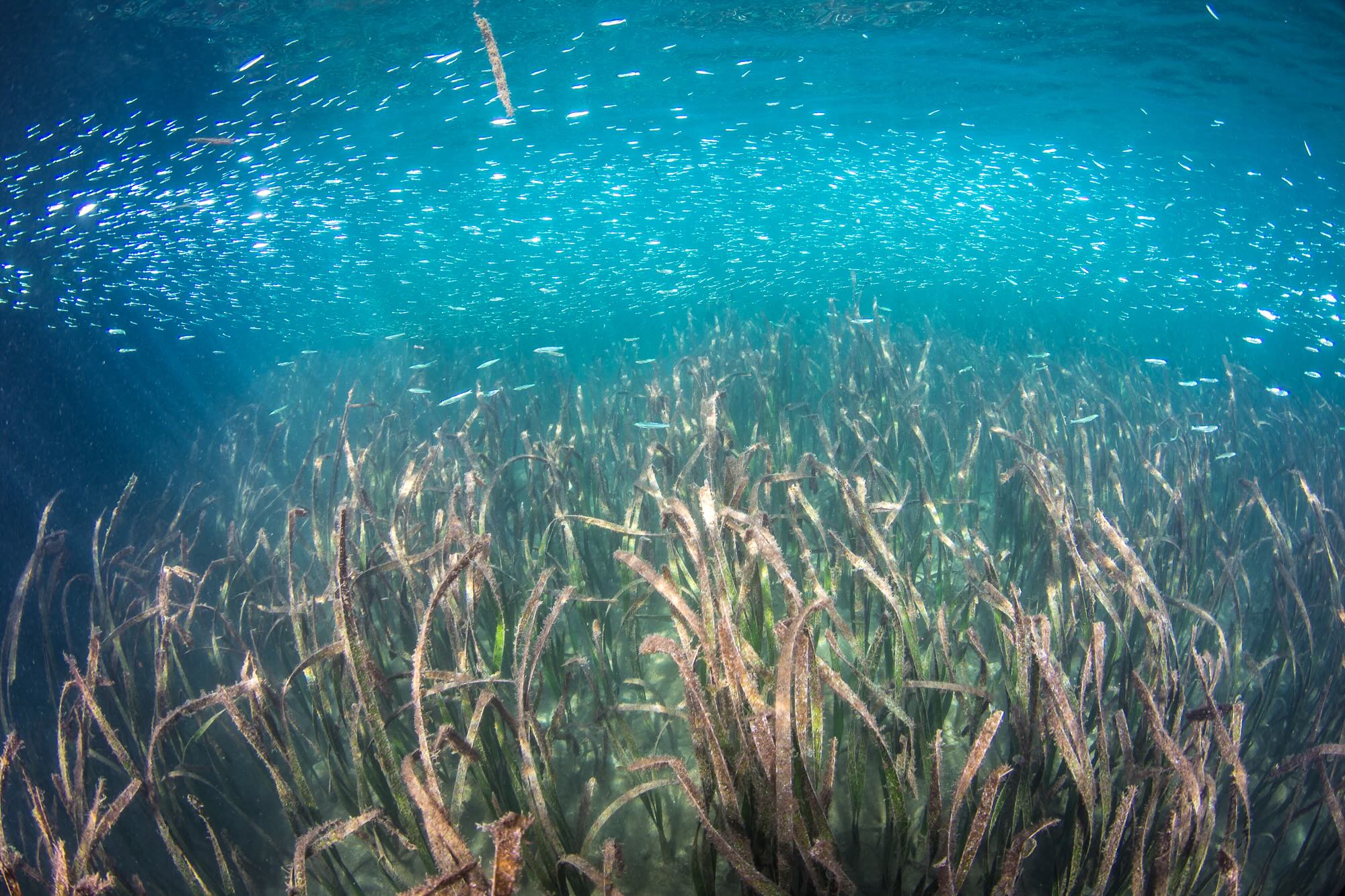
By: Prof Kathryn McMahonHealthy seagrass beds are known to be important for supporting fisheries. Seagrasses are often nursery habitats for fishery species, so it is an important place where young fish seek protection and feed. Some species also use seagrass meadows when they are adults. In Australia fisheries species that are associated with seagrass include blue swimmer crabs, prawns, rock lobster, whiting, tailor, herring, squid, luderick, bream, snapper and sea mullet.
Climate change can effect this relationship. For example, if seagrass is lost or impacted due to climate change, from for example a marine heatwave event, then less seagrass habitat can lead to reduced numbers over time. There are a number of examples in Australia where prawn catches were significantly reduced following seagrass loss in Exmouth but recovered when the seagrass recovered or crab numbers that declined up to three years after a marine heatwave where there was seagrass loss, resulting in the closure of the fishery for two years.
Image credit: Ocean Image Bank, Matt Curnock
Supporting gallery:
Answered by: