Keeping an eye on Australia’s reefs from afar
- News item
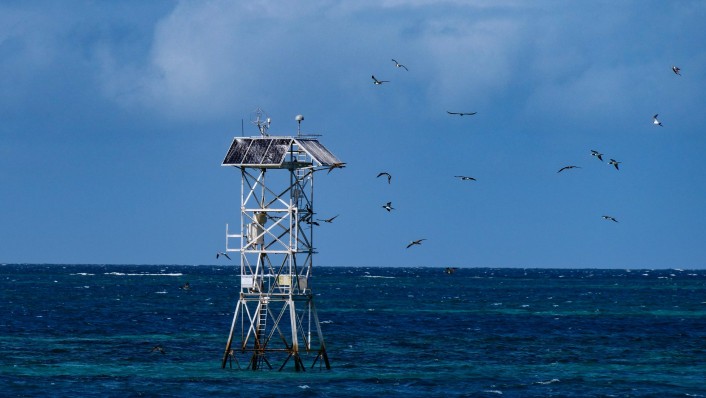
Australia’s tropical reefs face increasing threats from warming oceans, extreme weather, and marine heatwaves. Scientists at the Australian Institute of Marine Science (AIMS) are monitoring these ecosystems both up close — in the water — and from afar, using satellites, sensors, and advanced modelling to track ocean temperatures, currents, water quality, and weather conditions in real time.
AIMS has established a network of buoys, moorings, weather stations, and autonomous ocean gliders, supported by a team of oceanographers who collect, analyse, and interpret the data. These instruments provide critical insights into conditions that can trigger coral bleaching, harmful algal blooms, or other ecosystem stressors.
“Ocean temperature is fundamental to marine life,” explains Dr Jessica Benthuysen, an AIMS physical oceanographer. “Fishes can move to cooler waters, but corals cannot escape marine heatwaves. Understanding when, where, and how extreme temperatures occur helps us protect and restore vulnerable reefs.”
The monitoring network also supports fisheries, tourism, and public safety, highlighting the importance of integrating science, management, and climate adaptation to safeguard Australia’s reefs.
Read the full AIMS article here