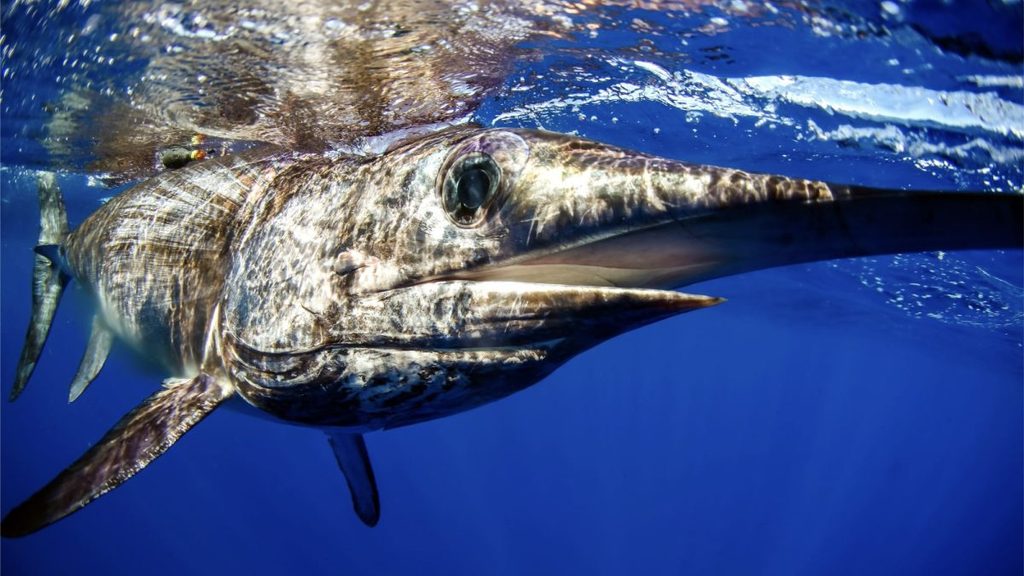
What are swordfish doing more than 1,000 metres beneath the surface?
- Publication
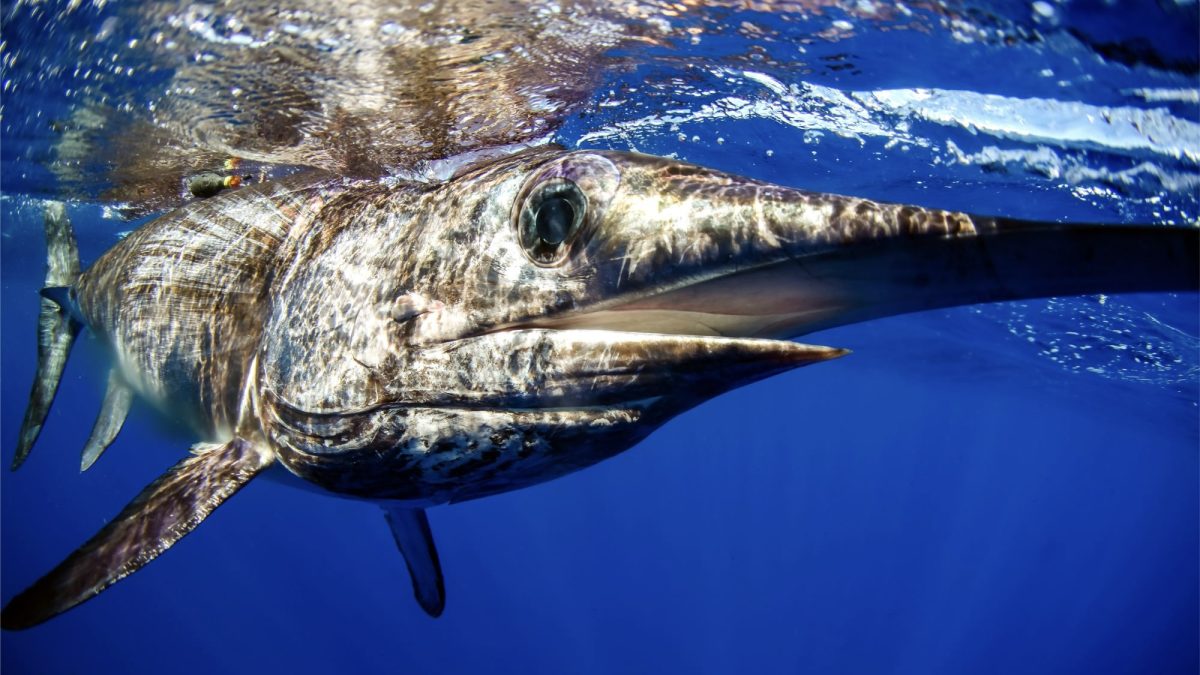
Swordfish are well known for their long-distance migrations and ability to dive into deep, cold waters. But new research suggests some of their deepest dives may serve a purpose beyond hunting.
Published in Marine Biology, a study led by Dr Ciara Willis investigated the diving behaviour of 34 North Atlantic swordfish using satellite tags.
Swordfish typically spend daylight hours at depths of around 400–700 metres before returning towards the surface at night, following the daily movements of their prey. However, researchers identified a series of unusual dives that took some fish much deeper, reaching depths of up to 1,664 metres.
These dives were generally brief, lasting around 45–55 minutes, and were more likely to occur in areas with highly variable sea surface temperatures and elevated sea levels. These conditions can indicate dynamic ocean features such as fronts, eddies and major currents.
Rather than being primarily driven by hunting or escaping predators, the researchers suggest these dives may allow swordfish to sample conditions throughout the water column. This environmental information could help the fish navigate their surroundings during long-distance migrations.
Understanding how fish respond to changing ocean conditions is an important part of preparing fisheries for climate change. As ocean temperatures, currents and the distribution of prey shift, fish may respond by changing where they live, when they migrate or how they use different parts of the water column.
These behavioural responses can help species cope with changing conditions, although their ability to adapt will depend on how quickly environmental conditions change and whether suitable habitats remain accessible.
Satellite tagging provides researchers with a way to observe these responses in species that would otherwise be difficult to monitor across vast ocean distances. Electronic tags can record information such as a fish’s depth, the water temperatures it experiences and its movements over time. When combined with oceanographic data, this information helps scientists investigate how fish behaviour relates to environmental conditions.
While this study does not establish whether swordfish are changing their behaviour in response to climate change, it demonstrates how electronic tagging can help build a better understanding of how highly migratory species interact with their environment.
This information is valuable for anticipating potential changes in fish distributions and supporting fisheries management as ocean conditions continue to change.