Turning climate science into action for Australia’s seafood sector
- News item
- Publication
As climate change continues to reshape Australia’s oceans, one challenge remains consistent: how do we translate complex climate science into information that is genuinely useful for decision-makers and industry on the water?
New research connected to AFMA’s Climate Adaptation Program provides valuable insights into how this gap can be bridged, and highlights the power of clear, trusted science communication in building climate-resilient fisheries.
A recently published CSIRO-led paper in Reviews in Fish Biology and Fisheries reports on the development and delivery of AFMA’s first Climate and Ecosystem Status Reports, produced during 2023–24 for 10 Commonwealth fisheries across Australia. These reports were designed to improve awareness and understanding of climate-driven ecosystem change among fisheries managers, advisory groups and industry, ensuring climate information is meaningfully incorporated into management and consultation processes.
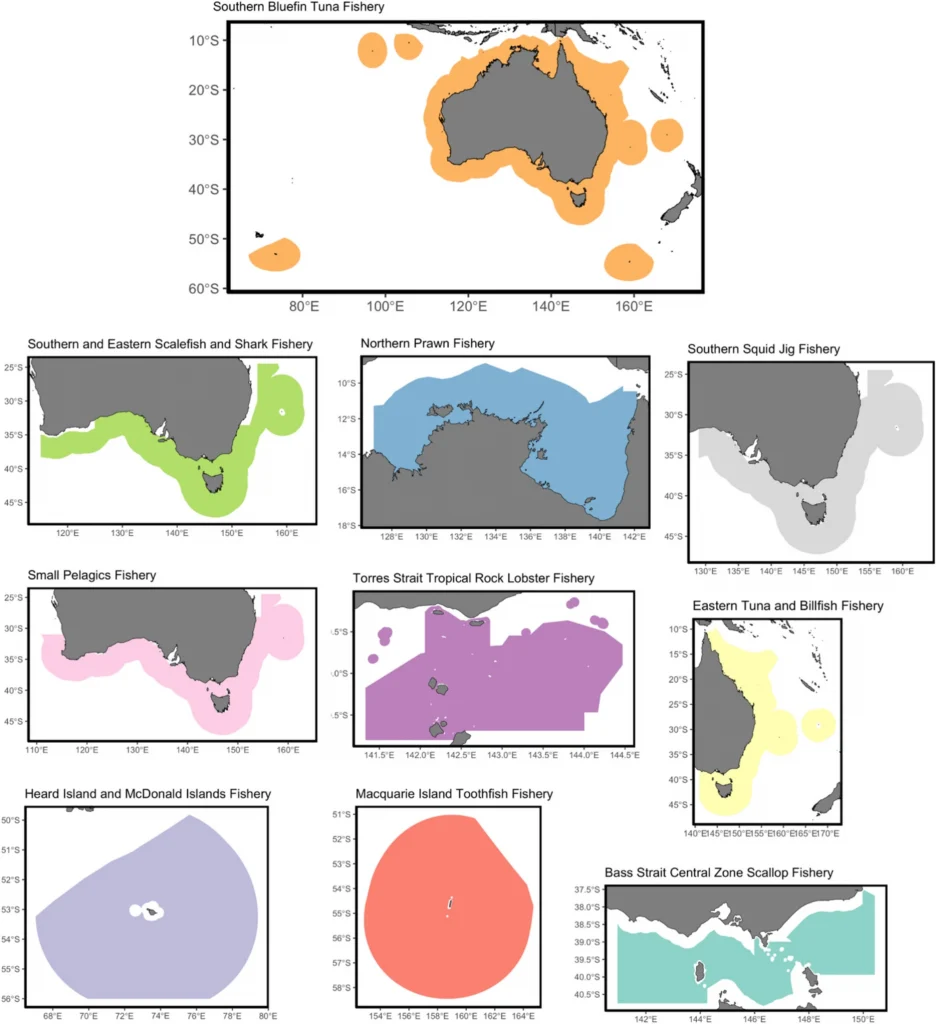
Rather than overwhelming stakeholders with disconnected datasets, the reports bring together historical climate trends, ecosystem indicators, fishery-independent surveys, industry observations, and tailored seasonal forecasts into a single, accessible overview for each fishery. The result is practical, regionally relevant information that supports both short-term operational decisions and longer-term strategic planning.
Drawing on experience from producing and delivering the first suite of reports, the authors identified six key lessons for effective climate communication:
- Tailored environmental indices enhance relevance, making climate information easier to interpret and apply.
- Ecosystem observations are essential, though they remain spatially and temporally patchy.
- Fishery-independent surveys provide vital baseline data for understanding ecosystem change.
- Remote climate drivers must be considered, as distant processes can strongly influence local conditions.
- Seasonal forecasts offer actionable insights for near-term planning.
- Fisher observations provide context-rich knowledge and should be systematically incorporated.
Importantly, the authors note that both the reporting structure and lessons learned are transferable beyond Australia. As they write, “The lessons and general reporting structure can be applied to the development of other climate and integrated ecosystem reporting activities that are ongoing around the world.”
AFMA’s Senior Manager of Climate Adaptation and Strategic Reform, paper co-author and Sea Change Australia advisory board member Daniel Corrie says the insights are already being embedded into AFMA’s Climate Adaptation Program, now in its third year.
“These reports are a practical step toward climate-informed fisheries management,” Mr Corrie said. “By combining historical trends, ecosystem indicators, and seasonal forecasts, we’re helping advisory groups and industry anticipate and adapt to changing ocean conditions.”
For Sea Change Australia, this work exemplifies the project’s core aim: connecting world-leading climate science with the people and sectors that depend on healthy oceans. All five authors – Stephanie Brodie, Alistair Hobday, Daniel Corrie, Natalie Couchman and Beth Fulton – are all directly involved in the Sea Change Australia project.
As climate impacts intensify, tools like the Climate and Ecosystem Status Reports demonstrate how well-designed science communication can support informed decision-making, foster collaboration between scientists and industry, and strengthen the resilience of Australia’s seafood sector in a rapidly changing ocean.
Read more at AFMA: https://www.afma.gov.au/news/afmas-climate-adaptation-program-reveals-science-communication-insights
Read the recently published paper: Building climate-smart fisheries in Australia: insights from climate and ecosystem status reports