When Food Doesn’t Show Up: Adapting Shellfish Aquaculture to a Changing Ocean
- Adaptation story
- New South Wales
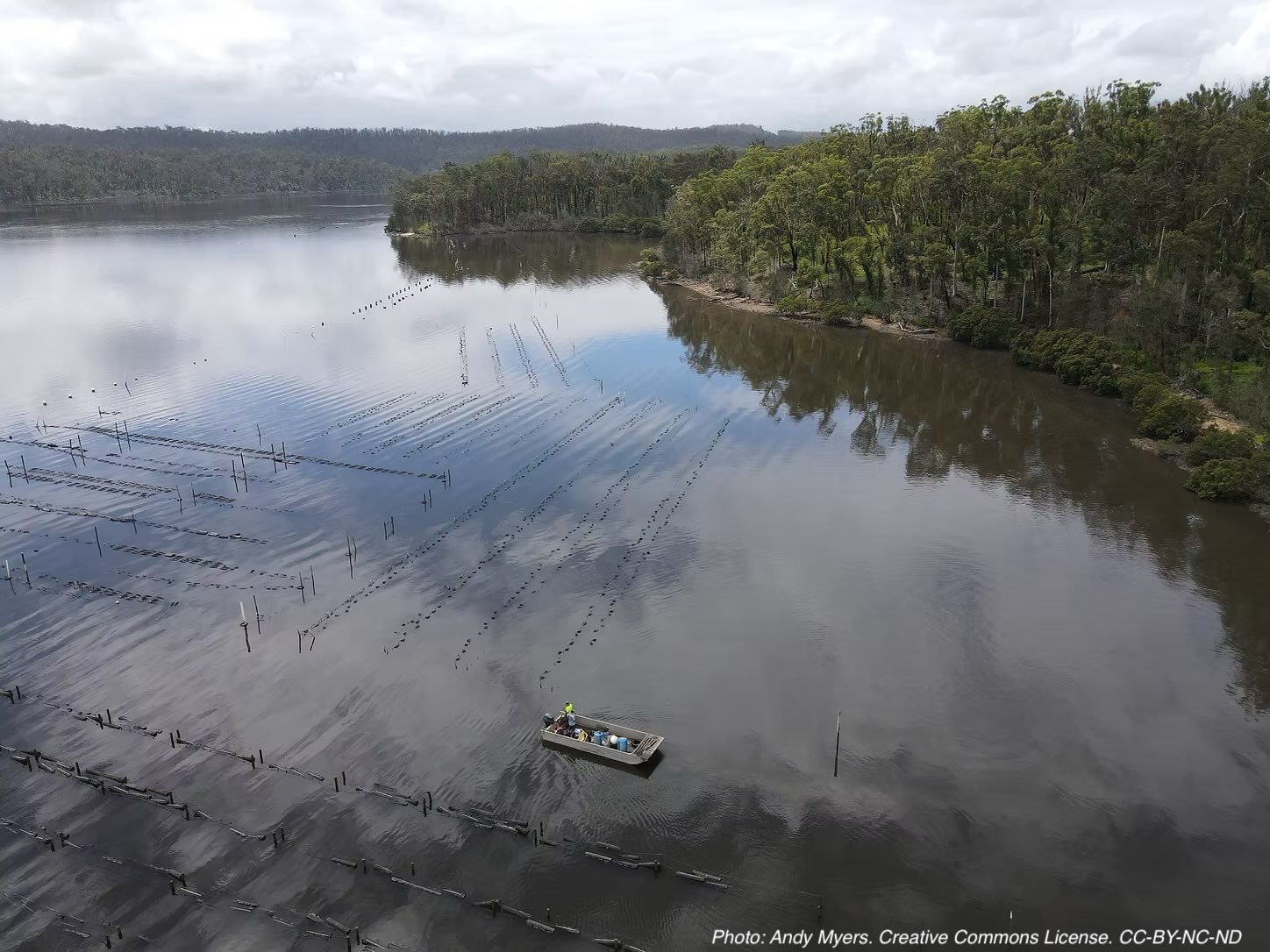
Australian shellfish farming has always depended on the natural productivity of the ocean. Oysters, mussels and clams rely on phytoplankton carried by currents, tides and upwelling systems, which is why aquaculture leases are carefully selected in locations with reliable (free) food delivery. But as aquaculture specialist and advisor Sam Gordon (Blue AgriFood Advisory) reflects, climate change is beginning to alter those foundations. Strengthening of the East Australian Current, alongside warming waters and changing ocean conditions, is shifting the movement of nutrient-rich water along Australia’s east coast. As warmer, nutrient-poor water extends further south towards Tasmania, some shellfish-growing regions may face less reliable food availability and greater year-to-year variability in shellfish growth and conditioning. More information available at CSIRO — Marine life and our changing climate.
Rather than viewing this as a crisis, the sector is already exploring adaptation pathways.
Farmers, researchers and hatcheries are investigating options such as relocating leases to areas with more reliable food delivery, including offshore environments, selective breeding of shellfish better suited to lower or more variable food conditions, and greater investment in hatcheries to produce more resilient spat. Controlled onshore conditioning systems are also being discussed as a potential way to support shellfish growth and market readiness during periods of environmental variability. While still theoretical at a commercial scale, this approach would require reducing microalgae production costs and optimising feeding regimes for oyster conditioning. Further research and collaboration with industry could help explore the commercial feasibility of these systems as part of future adaptation pathways.
These approaches highlight how adaptation in aquaculture is not a single solution, but a suite of strategies that can help businesses remain productive under changing ocean conditions.
As Sam Gordon also points out, an important question remains: who pays for adaptation? While shellfish farmers carry the costs of responding to environmental change, their farms continue to provide broader public benefits, including natural nitrogen removal and water filtration services. Recognising these environmental services could create new opportunities to support adaptation investment across the sector. Supporting shellfish aquaculture adaptation is not only about protecting seafood production and regional livelihoods, but also about recognising the wider ecological value these industries contribute to coastal communities and marine ecosystems.
This story was inspired by reflections shared by aquaculture specialist and advisor Sam Gordon (LinkedIn).