Growing a Seaweed Future
- Adaptation story
- New South Wales
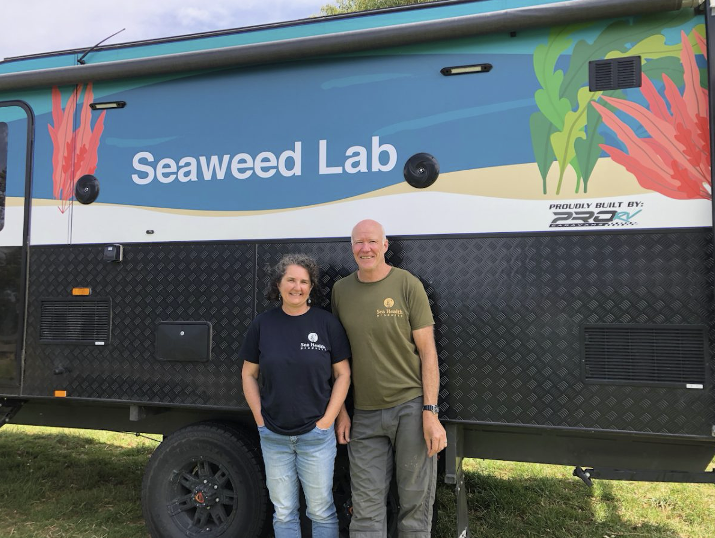
Mobile hatcheries and restoration projects are helping build a climate-ready kelp industry in Australia.
On a property in Tilba on New South Wales’ south coast, marine scientist Jo Lane is working at the intersection of restoration and industry, helping shape what a climate-ready seaweed future could look like for Australia.
After two years in South Australia building kelp aquaculture capacity, Lane has returned home with Australia’s first mobile seaweed hatchery in tow. Designed and built by her husband Warren Atkins, the portable “Seaweed Lab” allows researchers and start-ups to collect seaweed in the field and immediately process clean seedstock, dramatically improving cultivation success and reducing contamination.
It’s a practical innovation aimed at scaling Australia’s emerging seaweed industry at a time when ocean warming, marine heatwaves and ecosystem decline demand new approaches.
Lane, owner of Narooma-based Sea Health Products, has long worked at the interface of marine science and business. In South Australia, where regulatory settings support aquaculture expansion, she secured marine leases and partnered with tuna and mussel farmers to introduce kelp farming alongside existing operations.
The goal is multi-layered: produce biomass for food, fertiliser and agricultural feed; absorb excess nutrients; and potentially help buffer against harmful algal blooms. Seaweed cultivation can also support low-carbon supply chains and regional employment, strengthening coastal economies as climate pressures intensify.
At the same time, Lane remains deeply involved in kelp forest restoration efforts in NSW. Along Australia’s Great Southern Reef, warming waters and marine heatwaves have accelerated the spread of long-spined sea urchins, contributing to widespread kelp loss. Working with the Joonga Land and Water Aboriginal Corporation in Narooma, she is growing kelp seedstock to support restoration trials aimed at rebuilding habitat for abalone, rock lobster and reef fish.
Seaweed is increasingly recognised for its role in reducing livestock methane emissions, supporting sustainable agriculture inputs and replacing fossil-based materials. But realising that potential depends on domestic production capacity.
“If we have more kelp, we can do all of that,” Lane says. “But first we need to grow it here.”
From mobile hatcheries to reef restoration and aquaculture partnerships, Australia’s seaweed sector is beginning to scale. In a warming ocean, growing kelp is not just an industry opportunity, it’s part of a broader strategy to restore ecosystems, reduce emissions and build resilience along our coasts.
Read more here: https://aboutregional.com.au/kelp-scientist-jo-lane-returns-to-tilba-with-an-australian-first/490916/