From Waste to Product – Oyster Innovation in NSW
- Adaptation story
- New South Wales
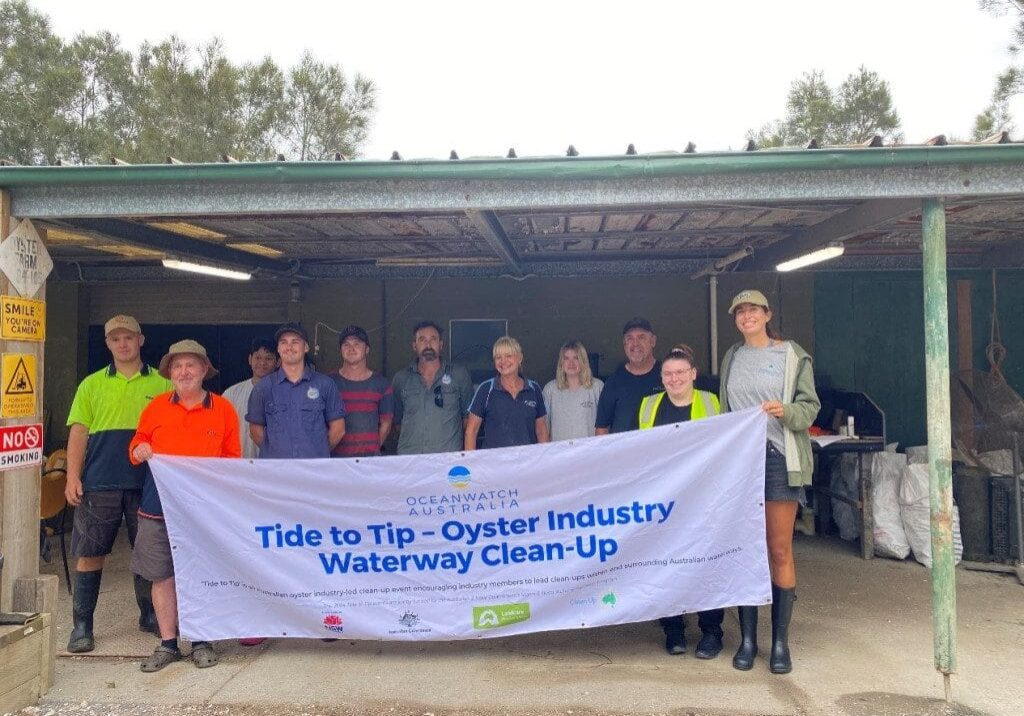
The NSW oyster industry faced a major challenge in 2021 when floods caused $17 million in damages, destroying stock, infrastructure, and the environment. Discarded oyster gear and shell waste, often stockpiled or sent to landfill, posed both environmental and financial risks, especially as flooding events washed debris into waterways.
In response, OceanWatch Australia partnered with the NSW oyster industry to deliver “From Waste to Product – Identifying Plastic and Shell Recycling Pathways in the NSW Oyster Industry”. Funded through the Storm and Flood Industry Recovery Program, the project applied circular economy principles to transform waste into value, building resilience and sustainability across the sector..
Key achievements:
- Conducted a statewide feasibility study and waste audit across 20 estuaries, identifying 126 tonnes of plastic stockpiled and 4,425 tonnes of shell waste annually.
- Ran 50 estuary clean-ups, removing over 28.5 tonnes of debris with the help of 477 volunteers, including oyster farmers.
- Trialled innovative recycling solutions: over three weeks, 30 tonnes of plastic infrastructure were shredded, transported, and repurposed by a Sydney recycler.
- Established partnerships with universities, recyclers, and industry, exploring value-added uses for shell and plastic waste.
- Developed a lost-gear matching app, making post-flood recovery faster and more efficient.
- Implemented a timber tipping subsidy, safely removing 359 tonnes of treated timber from estuaries.

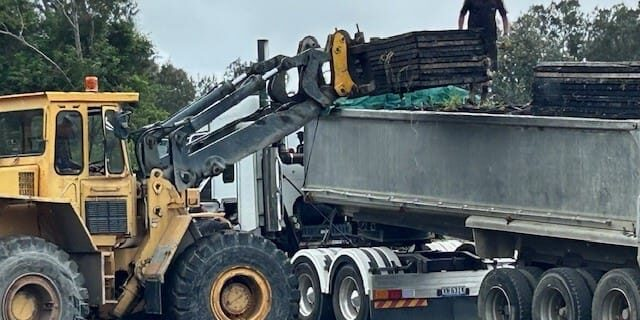
Guided by a steering committee of industry, recycling, and natural resource professionals, the project set out to not only reduce waste but also create economic opportunities and improve environmental stewardship across the NSW oyster industry.
By turning challenges into opportunities, From Waste to Product demonstrates how innovative thinking, collaboration, and a circular economy approach can drive resilience, sustainability, and productivity in Australian aquaculture.