From Spines to Soil: Turning urchin barrens into farm resilience
- Adaptation story
- Tasmania
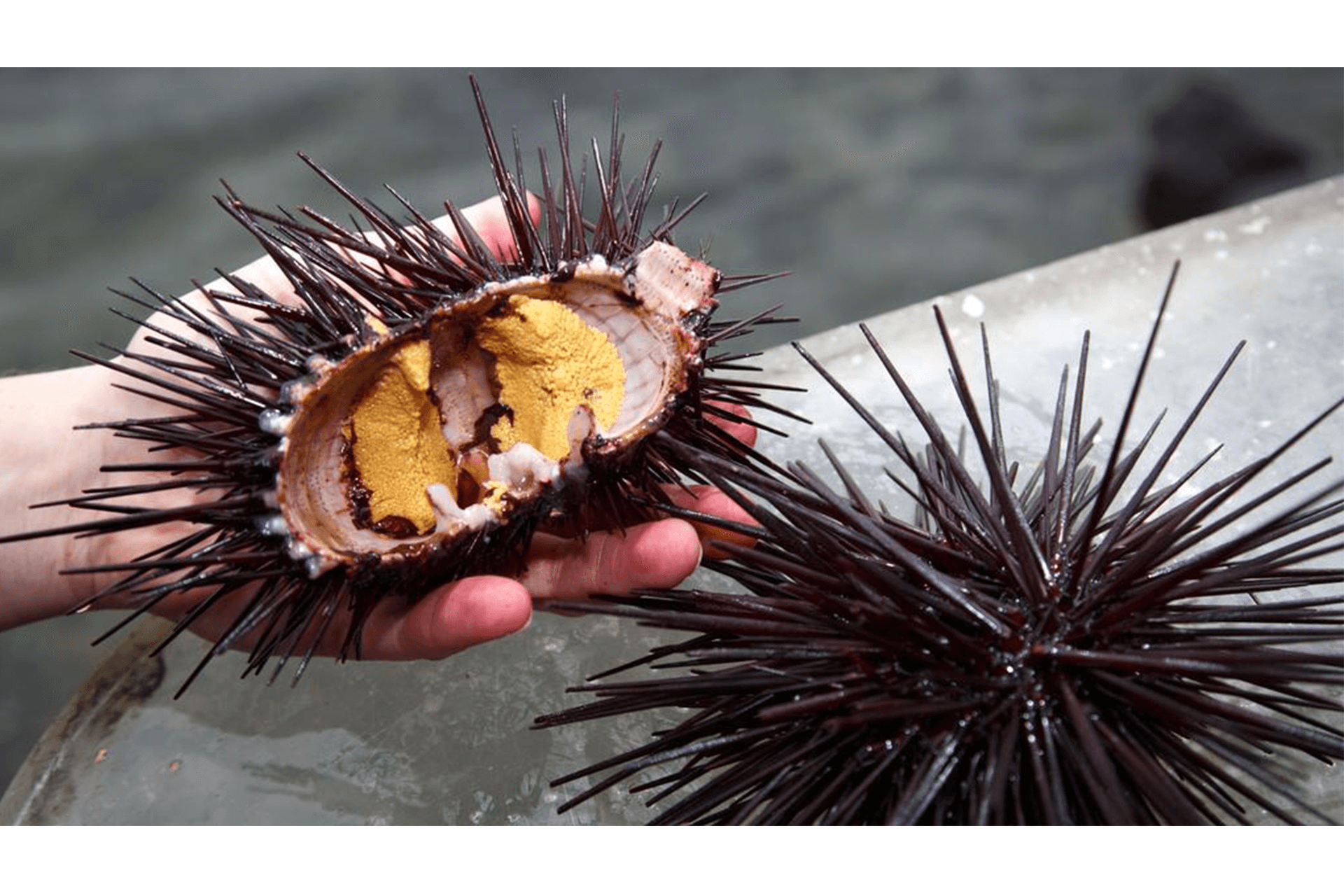
Along Tasmania’s east coast, a small, spiny range-extender has transformed once-lush kelp forests into barren seascapes. But what was once seen only as a marine crisis is now sparking an unlikely land-based solution, turning sea urchin waste into a tool for agricultural resilience.
The long spined sea urchin has expanded its range south with warming waters, establishing vast populations on Tasmanian reefs. With more than 20 million urchins now grazing the coastline and around 15% of reef habitat converted to urchin barrens, the ecological and economic impacts have been profound. Harvesting urchins for their roe has become one of the most effective control measures, yet it leaves behind another challenge: waste. Nearly 90% of each urchin is discarded, much of it sent to landfill at considerable cost to processors.
That’s where adaptation meets innovation.
At the Tasmanian Institute of Agriculture (TIA), Research Fellow Dr Harriet Walker is leading a circular economy project that reframes this “waste” as a resource. Working in partnership with the Institute for Marine and Antarctic Studies (IMAS) and supported by the Marine Bioproducts CRC and the Tasmanian Government, the team is investigating whether processed urchin waste can be transformed into a soil ameliorant for farms across the state.
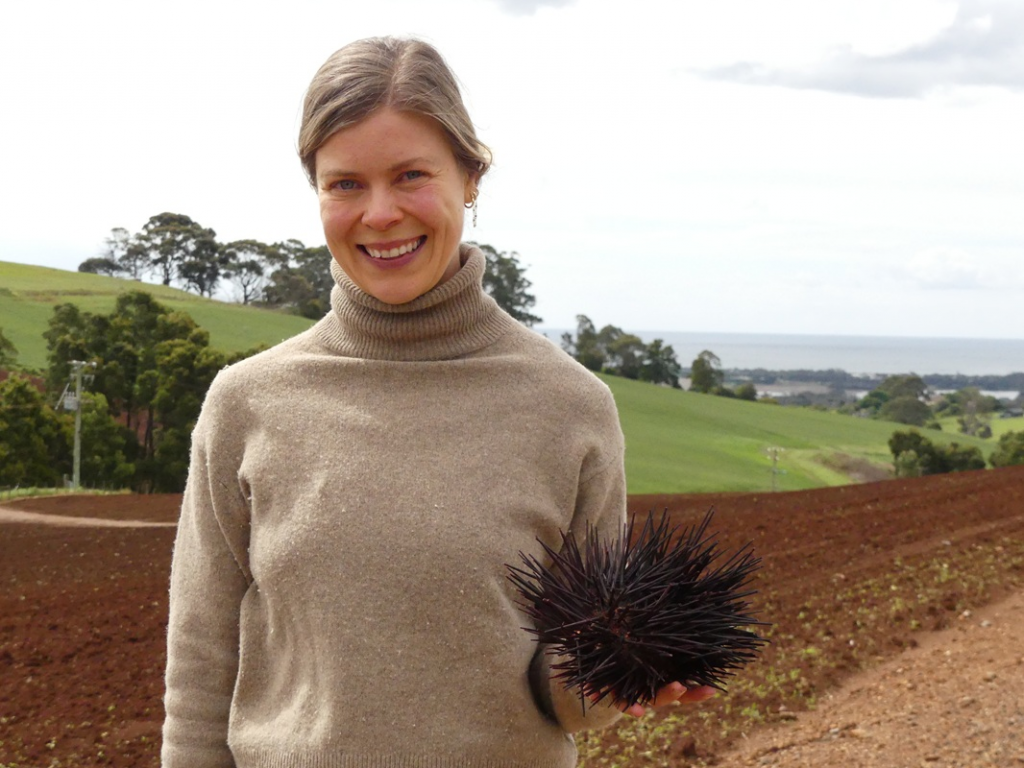
The logic is compelling. Ground and dried urchin waste is naturally rich in calcium – a critical nutrient for raising soil pH in acidic soils – along with key micronutrients such as boron and iron. Early trials have shown that urchin-derived products can increase soil pH with longer-lasting effects than some commercial lime products, without raising soil salinity. For growers facing increasing climate variability, improving soil structure and buffering capacity is a practical step toward resilience.
Field trials are now underway at commercial scale: in a southern Tasmanian vineyard, an organic apple orchard, and at TIA’s Vegetable Research Facility in north-west Tasmania. In vineyards where soil acidity posed a challenge, urchin waste treatments delivered persistent pH improvements. Potato trials have shown elevated soil pH at harvest, with ongoing monitoring to assess long-term soil health impacts, including chemical, physical and microbiological changes.
For both marine and agricultural industries, the benefits are twofold.
On the water, stronger markets for harvested urchins support continued removal of this climate-driven pest, easing pressure on fragile reef ecosystems and kelp forests. On land, farmers gain access to a locally sourced, organic alternative to synthetic inputs, reducing reliance on imported products while lowering the ecological footprint of soil management.
What began as a response to warming oceans is becoming a broader story of adaptation. By connecting sea and soil, Tasmania is demonstrating how climate challenges can catalyse cross-sector solutions. Invasive urchins, once emblematic of reef decline, are being reimagined as part of a regenerative cycle, restoring marine habitats while strengthening agricultural systems.
It’s a powerful reminder that resilience doesn’t always come from adding something new. Sometimes, it comes from seeing existing resources differently, and working with nature, rather than against it.
Read more about this work here