Beyond the Heatwave: Strengthening Australia’s Abalone Industry for a Warming Future
- Adaptation story
- New South Wales
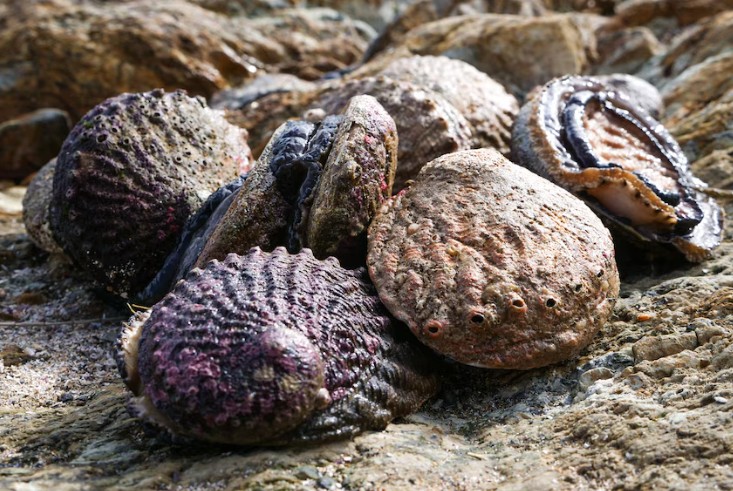
As marine heatwaves become stronger, longer and more frequent, Australia’s fisheries are entering a new era of climate risk. For abalone — one of the nation’s most valuable and temperature-sensitive wild fisheries — the stakes are high.
A new study led by Dr Melinda Coleman and colleagues outlines the first industry-focused marine heatwave response plan developed specifically for a wild abalone fishery. Co-designed with the NSW abalone industry and government managers, the plan offers a practical blueprint for how fisheries can prepare for, respond to, and recover from extreme ocean warming events. This represents adaptation in action.
Why abalone are vulnerable?
South-eastern Australia is recognised as a global climate change hotspot, warming two to four times faster than the global average. Marine heatwaves — prolonged periods of unusually warm ocean temperatures — are increasing in frequency and intensity.
Abalone are particularly sensitive to thermal stress. Globally, heatwaves have triggered mass mortalities, fishery closures and long-term recruitment failures. In Western Australia, a 2011 marine heatwave caused catastrophic losses of Roe’s abalone. Similar impacts have been recorded in the United States, Mexico, New Zealand and South Africa.
In NSW, the fishery for blacklip abalone (Haliotis rubra) is predominantly a live market. That means product quality and survival depend not only on stock health in the ocean, but also on careful handling post-harvest. Harvesting already heat-stressed abalone can trigger mortality during transport or processing, compounding economic loss.
The challenge is clear: avoid harvesting stressed animals, maintain biomass, and build resilience before crisis hits.
A plan built with industry, not for industry
Rather than imposing top-down rules, researchers worked directly with divers, processors and the NSW Abalone Association to co-develop a response plan grounded in lived experience.
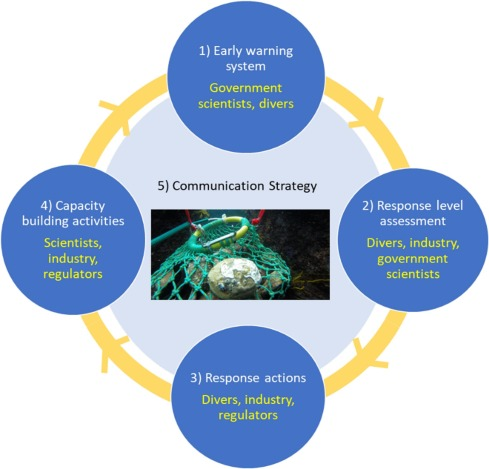
The result is a five-part framework designed to guide action before, during and after marine heatwaves:
- Early warning systems
Divers and scientists monitor marine heatwave forecasts, satellite sea surface temperatures, and — critically — real-time bottom temperatures collected during dives. Biological warning signs, such as “mushrooming” behaviour (abalone lifting off the reef), weak attachment, or unusual mortalities, are flagged early. - Response level assessment
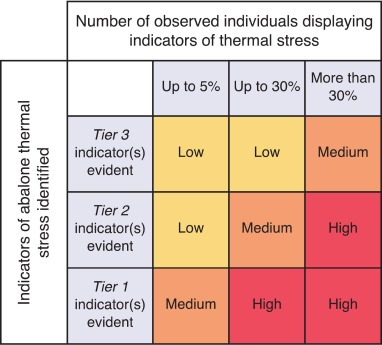
A simple matrix links the severity of biological stress indicators with the proportion of animals affected, triggering low, medium or high response levels. - Response actions
Actions escalate with risk.- At low levels: increased monitoring and careful onboard handling.
- At medium levels: shifting harvest away from heat-affected reefs, avoiding fishing during co-occurring stress events, and modifying vessel practices to reduce thermal exposure.
- At high levels: potential regulatory responses such as spatial closures, quota adjustments, or even translocation of healthy animals to cooler refuges.
- Capacity building
Identifying research gaps — including thermal thresholds, genetic resilience and habitat interactions — to improve future preparedness. - Communication strategy
Clear, timely information sharing between divers, processors and government ensures rapid response and avoids misinformation.
Trial by warm water
The plan was first trialled during the 2024–25 summer. While NSW avoided major biological impacts, a heat-related mortality event at a processing facility — linked to abalone harvested during anomalously warm conditions in another jurisdiction — reinforced the importance of careful handling and cross-border coordination.
The event validated the core premise of the plan: preparedness matters, even when impacts are uncertain.
It also highlighted a critical lesson — climate adaptation must extend beyond individual fisheries to shared supply chains and neighbouring states.
Embedding climate into fisheries policy
Perhaps the most significant outcome is that the response plan is being embedded into the industry’s Environmental Code of Practice and diver training programs.
The study also recommends regulatory adaptations, including:
- Withholding a portion of quota as a buffer against heatwave impacts.
- Shifting more harvest into cooler months.
- Embedding environmental indicators into harvest strategies.
- Increasing baseline biomass to strengthen resilience.
This moves marine heatwave planning from reactive crisis management to proactive governance reform.
A model for climate-ready fisheries
The abalone plan is the first of its kind globally, but its framework is adaptable to other climate-vulnerable fisheries and aquaculture sectors — from oysters and rock lobster to emerging offshore industries.
The key lesson is not just technical — it is cultural.
Successful adaptation depends on:
- Co-development with industry
- Formalising existing autonomous adaptation
- Integrating climate risk into policy and training
- Treating plans as living documents that evolve with science and experience
For Sea Change Australia, this story reflects a broader shift in the seafood sector. Climate resilience is no longer optional. It is becoming core business.
Marine heatwaves are forecast. Their impacts do not have to be.
By combining science, industry knowledge and responsive governance, Australia’s abalone sector is demonstrating that adaptation is not about abandoning fisheries — it is about equipping them to survive, recover and thrive in a warming ocean.
Read the paper in the Journal of Climate Risk Management here