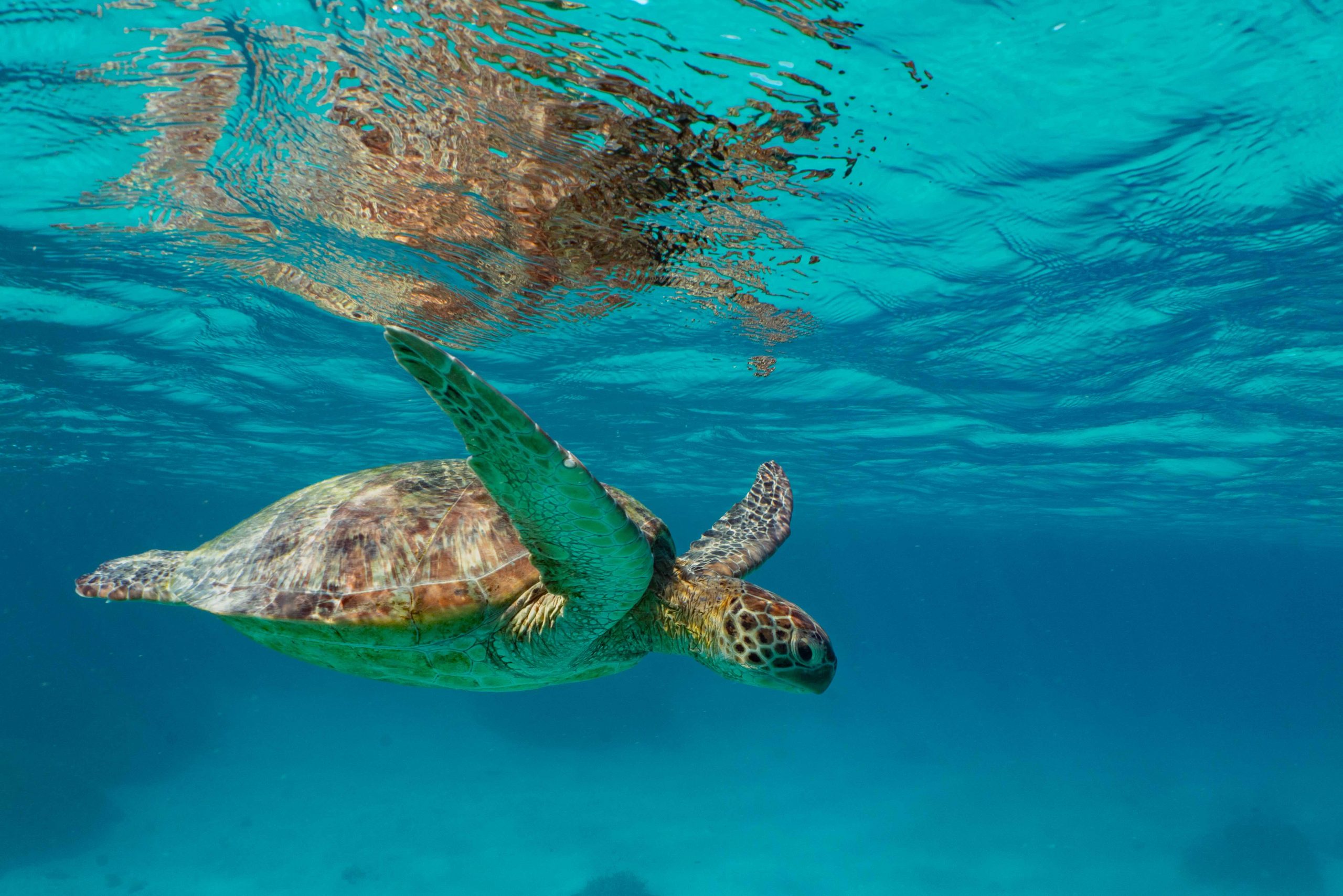
Turtles on the Great Barrier Reef
QUESTION
Have the numbers of turtles on the Great Barrier Reef increased? And is there a link between turtle populations and climate change?
ANSWER 1
By: Jaime RestrepoThe Great Barrier Reef (GBR) is a large ecosystem where several populations of sea turtles coexist. Most of these populations remain threaten, affected by different factors. Sea turtles have a slow development taking more than 30 years in some cases to become adults. Thus to assess changes in population structures take a long time. Although in the past years we have seen an increase in number of nesting green turtles in the northern GBR. Other populations like loggerheads, hawksbill, flatbacks and leatherback have shown no increase on their numbers. Leatherback turtles in particular are very rare to encounter in Queensland’s waters any longer.
Climate change is a great threat for all populations of sea turtles, affecting them during their most vulnerable state. Sea level rising is a great concern, the erosion of beaches due to high tides is constantly reducing the area for turtles to lay their eggs, and those egg clutches laid close to the water line get washout to the sea. The other aspect of climate change is the increase in female hatchlings. Sea turtles sex depends on the temperature eggs experience during the incubation period, if this temperature is high (over 30°C), the majority of hatchlings will be female. And if temperatures are too high (over 36°C), all the eggs will die.
Supporting gallery: