Fish abundances in South Australia
QUESTION
With climate change, what types of fish are most likely to increase in abundance in South Australia?
ANSWER 1
By: Dr Fred BailleulUnfortunately, there is no simple answer to this question. First, it is difficult to predict exactly what the future will look like. Second, it all depends on what climate change entails and how it will manifest at regional and local scales.
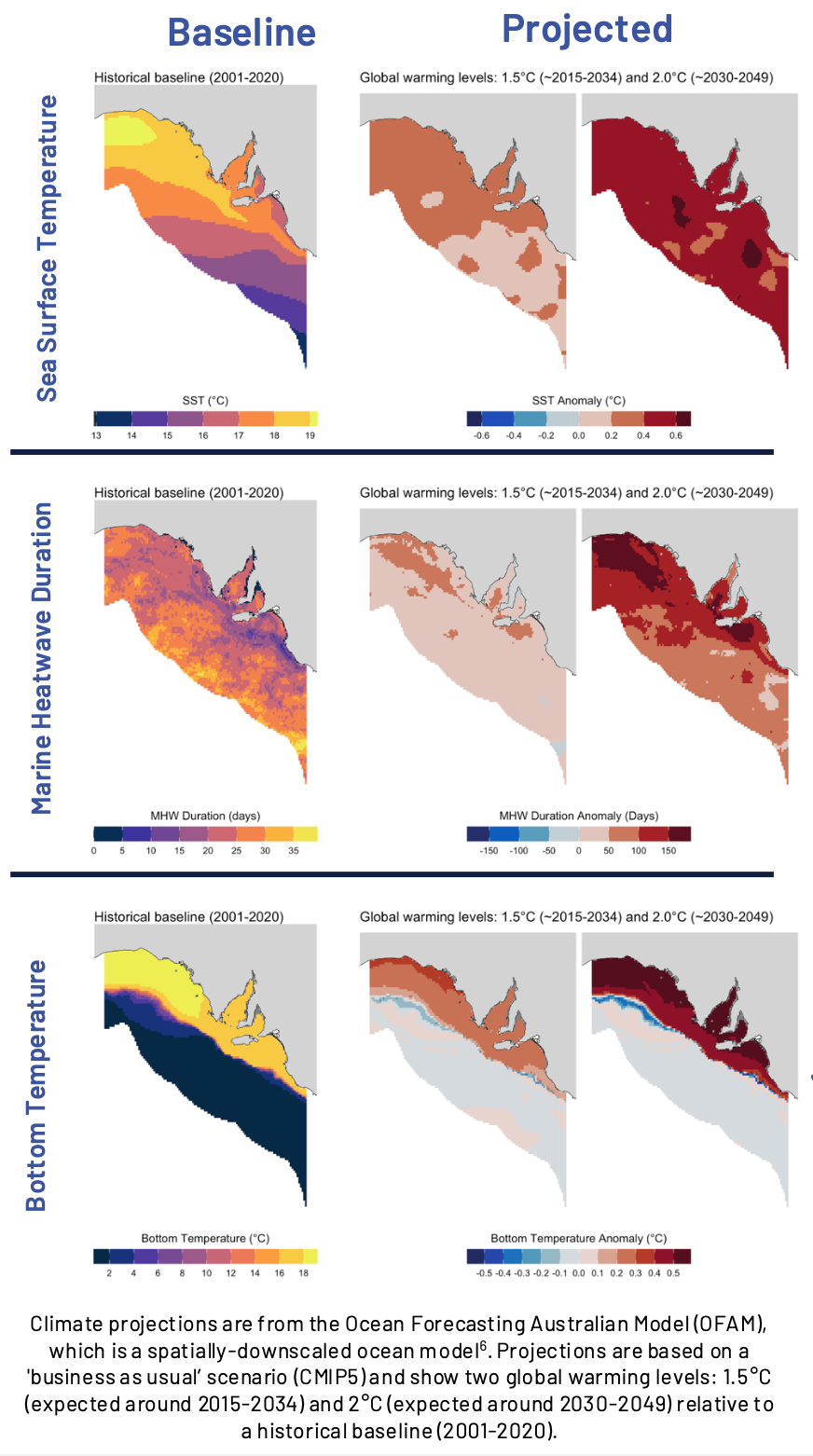
One of the most widespread consequences of climate change is the warming of both the atmosphere and the oceans. In many parts of Australia, increasing ocean temperatures have been associated with the southward expansion of tropical and subtropical marine species, particularly along the eastern and western coasts. Warmer waters allow species that were previously restricted to northern regions to survive and reproduce at higher latitudes.
In South Australia, though, the situation is more complex. Although ocean temperatures are increasing, the rate and magnitude of warming vary considerably among regions. The Spencer Gulf and Gulf St Vincent, for example, are warming more rapidly and can reach relatively warm, subtropical conditions, especially in summer. In contrast, warming across much of the surrounding State waters appears to be slower, partly because of seasonal upwelling, which brings colder waters onto the continental shelf.
This means that warmer conditions developing in parts of South Australia don’t necessarily provide a continuous pathway for tropical species to gradually move further south. An increase in the frequency of extreme events, such as marine heatwaves, could nevertheless create temporary corridors of warmer water that connect these regions, potentially facilitating the southward movement of tropical and subtropical species in South Australian waters.
Several commercially important species already found in South Australia could potentially benefit from warmer conditions, particularly species whose geographic ranges extend further north into tropical and subtropical waters. Because South Australia is at the cooler, southern end of their distribution, increasing temperatures could make conditions more suitable for them and potentially increase their abundance.
Blue swimmer crab and western king prawn are two examples of commercially important species that could benefit from warmer conditions, particularly in Spencer Gulf. Among fish species, Australian sardine may also respond positively to some aspects of warming, although its response is likely to be more complex and could vary between regions.
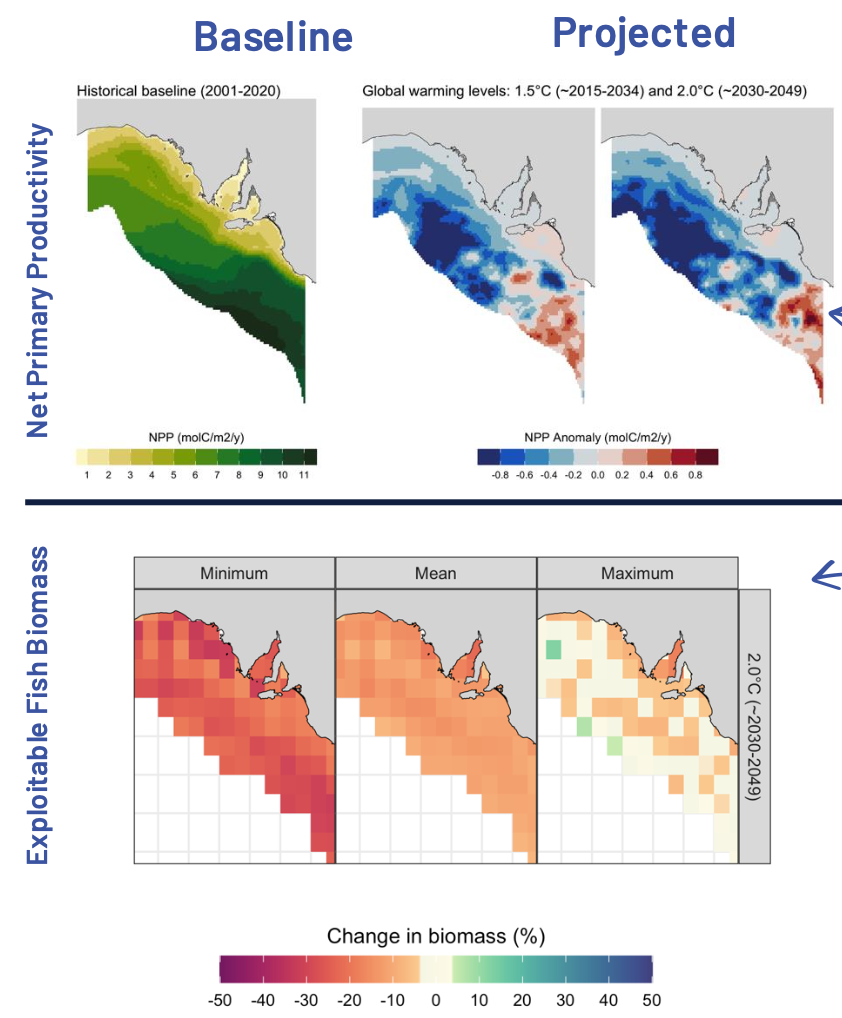
That said, looking at climate change only in terms of temperature provides a very simplistic view. Other changes, such as shifts in ocean productivity and plankton communities (and therefore food availability), ocean currents, acidification, deoxygenation, and more frequent extreme events such as marine heatwaves and harmful algal blooms, can all affect fish populations.
Importantly, these factors do not act independently. They interact with each other and can have very different effects depending on the species, life stage, and location. For example, environmental changes might improve growth and maturation while at the same time reducing recruitment. Or they might improve recruitment in one region but reduce it in another.
Climate change is also likely to change local marine communities by introducing new predators, competitors, and herbivores, while also changing food-web interactions and how ecosystems function. All of these changes will affect whether individual species are able to establish, survive, and maintain healthy populations in new environments.
Because of this, it is difficult to identify groups of species that will consistently become more abundant under climate change in South Australia. Species that prefer warmer conditions and are already near the southern edge of their distribution could be among the potential winners, particularly in the Spencer Gulf and Gulf St Vincent. However, whether their populations actually increase will depend on the combined effects of temperature, productivity, oceanography, extreme events, interactions with other species, and broader ecological changes.
So, overall, there’s still a lot of uncertainty about how climate change will reshape South Australia’s marine communities. Rather than being driven by temperature alone, future changes in the composition, distribution, and productivity of marine species will probably reflect the combined and often interacting effects of many environmental and ecological factors.
Figures are from the Sea Change Australia Climate Report Card for South Australia in 2026 and show project change in South Australian ocean conditions under different climate change scenarios. Access the full report card here: https://seachangeaustralia.org/climate-toolbox/access-climate-information/state-based-climate-report-cards/
Supporting gallery:
Answered by: