New paper: Did Australian policy prepare for a harmful algal bloom with significant human health impacts? Analysis and lessons from South Australia
- News item
- Publication
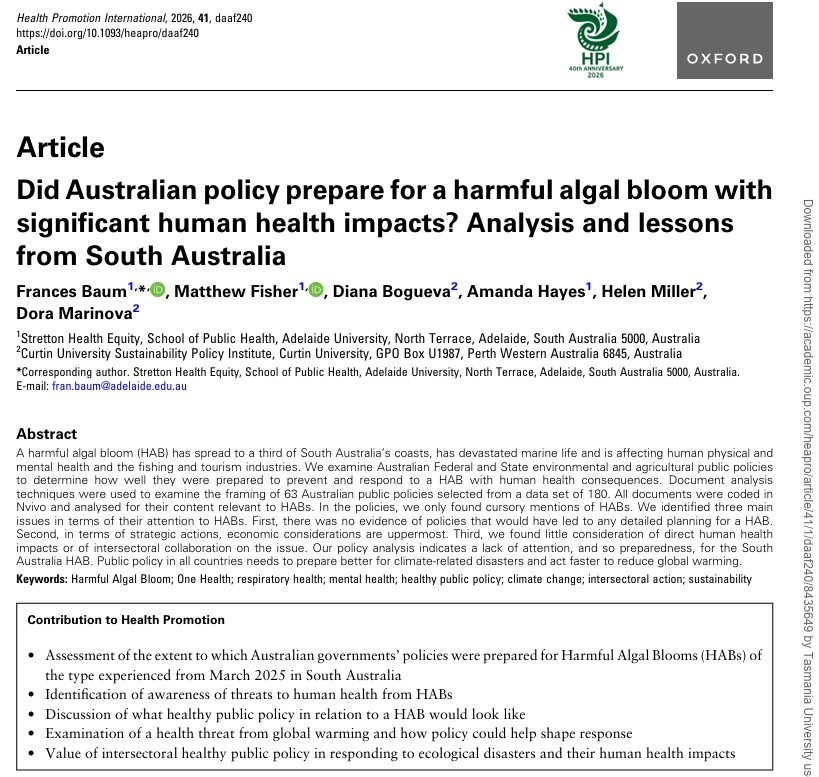
A new paper out in the Journal of Health Promotion International examines whether Australian federal and state policies were prepared to prevent or respond to a harmful algal bloom (HAB) with significant human health impacts, using the 2025 South Australian bloom as a case study. Through analysis of 63 environment, agriculture and fisheries policies, the authors find that HABs receive minimal attention in public policy, with no evidence of detailed planning for large-scale or prolonged events.
The study identifies three major shortcomings: a lack of preparedness and strategic planning for HABs, a strong dominance of economic and industry-focused framing over environmental and health considerations, and limited recognition of direct human health impacts or the need for intersectoral collaboration. Despite clear links between HABs, climate change and public health – including respiratory symptoms, mental health impacts and economic distress – these connections are largely absent from policy frameworks.
The authors conclude that Australian policy was poorly prepared for the South Australian HAB and argue that future public policy must better anticipate climate-driven ecological disasters. They call for stronger integration of health, environment and agriculture sectors, adoption of a One Health approach, and more proactive climate action to reduce the growing risks of HABs and their impacts on ecosystems, economies and human wellbeing.
Read the paper here