Climate Observations from Agfest
- News item
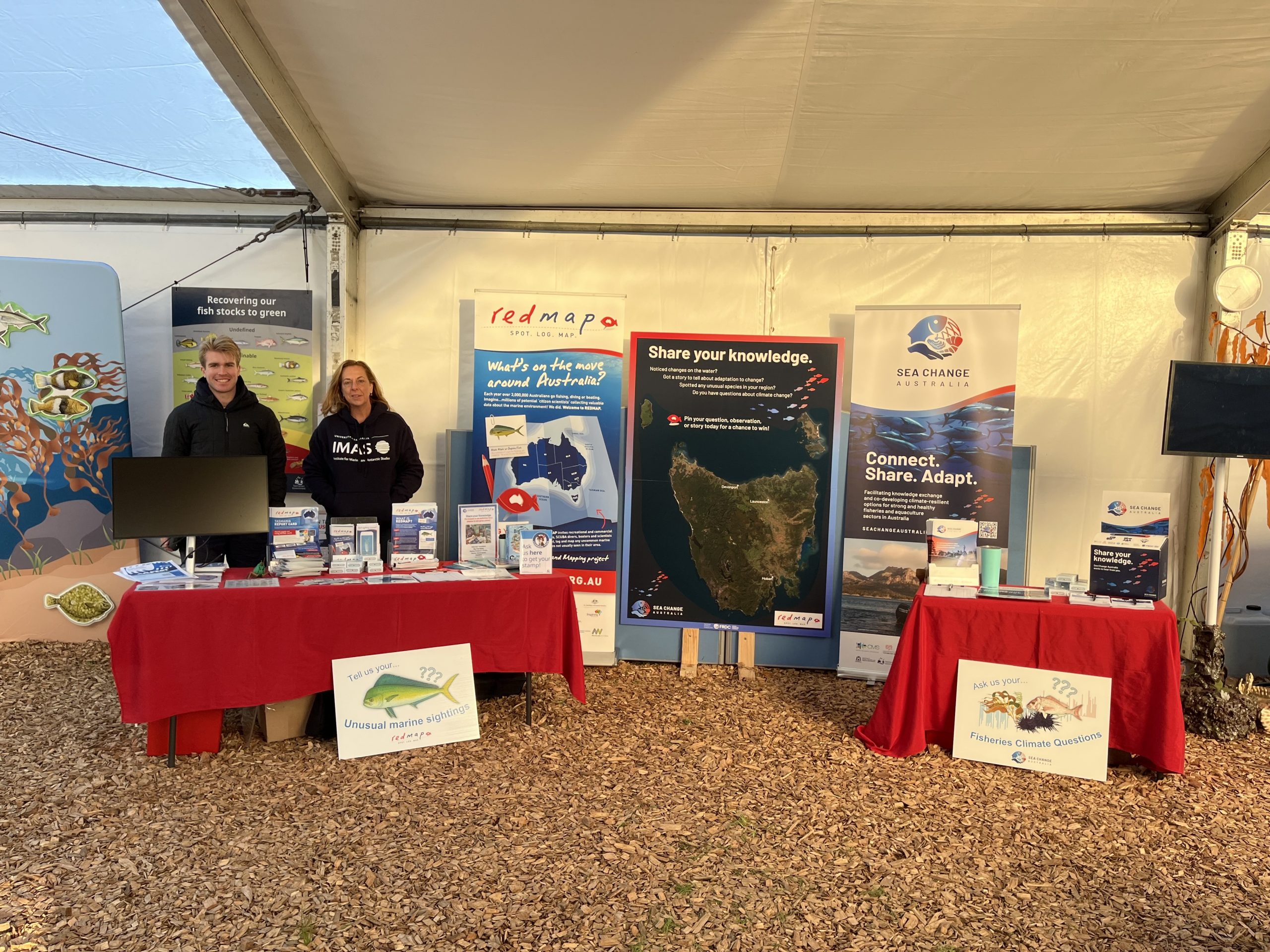
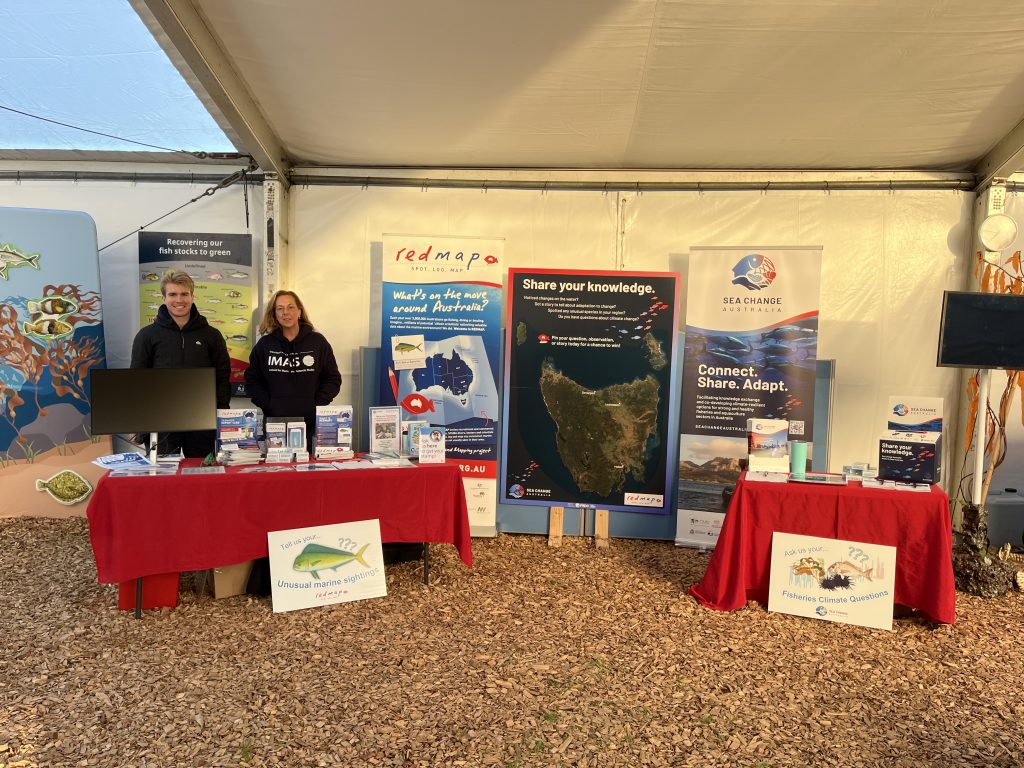
This year, the Sea Change Australia team attended Agfest, Tasmania’s premier agricultural field day, attracting over 60,000 visitors and 700 exhibitors each year. The aim was to connect with the commercial fishers, recreational fishers and aquaculture operators who know Tasmania’s waters better than anyone.
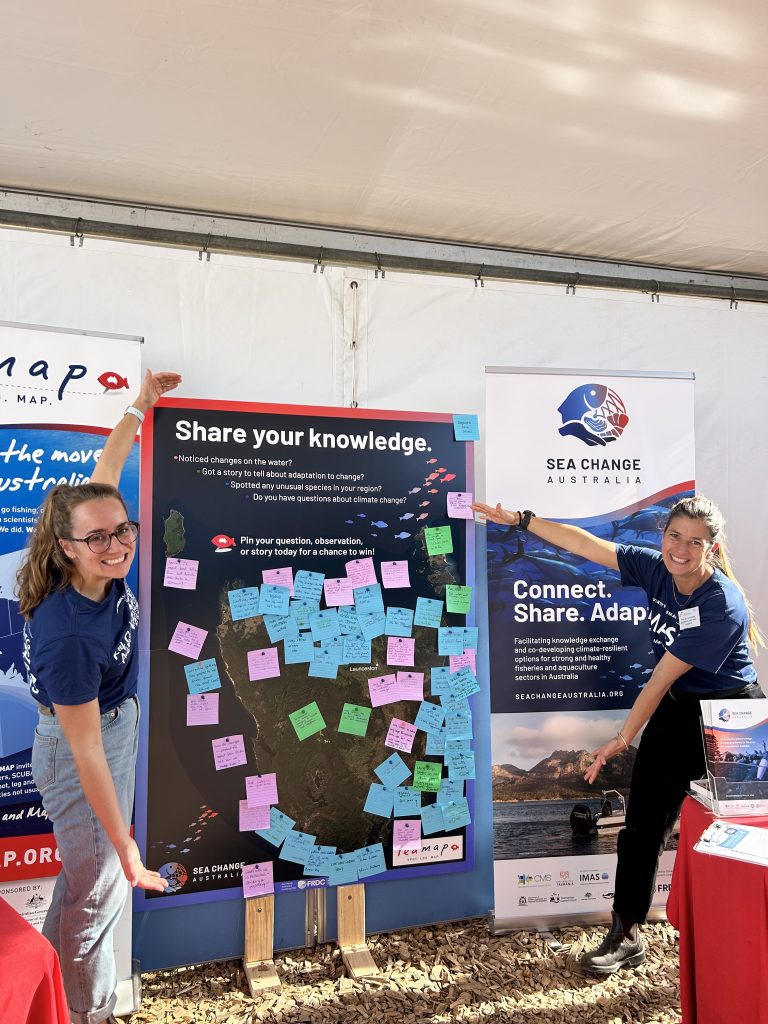
We set up a large map of Tasmania and a simple invitation: tell us any unusual sightings on the water and ask us what you want to know about climate change. Commercial fishers, recreational fishers and aquaculture operators placed post it notes on the map including observations of unusual species, stories of how they’re adapting, and any climate questions they have.
What everyone is observing
From our discussions, the clearest message was this: the species mix that people are catching is changing.
Warm-water fish that were once rare or absent are now regular catches. In particular, snapper have been the catch of the season, with frequent reporting of recreational catches statewide. Yellowtail kingfish are also being caught frequently, but anecdotally, it’s been a slow summer for kingfish compared to other years. King George whiting are also now widespread across the North of Tasmania and turning up at multiple other locations around the state. Game fish have also had strong seasons, with Yellowfin tuna caught at Eagle Hawk Neck, and a marlin caught inshore at St Helens.
Beyond fish, we heard stories of some unusual species turning up all over the state. We saw evidence of sea snakes off Port Sorell and Coles Bay, turtles off Devonport, mobular rays in the north and a green moray eel at Fortescue Bay. There were also some great tales of bronze whaler and thresher sharks spotted along the coast.
One species came up repeatedly, the range extending long-spined sea urchin. Multiple fishers noted populations across the north and east coast, and even some on the west coast and as far south as the Actaeon Islands. Urchins are a well-established ecological threat, capable of stripping kelp and reef habitat and creating large underwater barrens. Their spread was a consistent concern amongst recreational and commercial users alike.
Beneath the surface, conditions are shifting too. Fishers reported fewer westerly fronts coming down the west coast, and temperature loggers on southern rock lobster pots returning warmer readings than expected.
How everyone is adapting
The adaptation stories shared at Agfest were plentiful. Recreational fishers described shifting their target species, with more snapper and kingfish on the line where other species once dominated. Lobster fishers are spotting more Eastern Rock Lobster among their catch and they are factoring more whale activity into their pot placement, with humpbacks, southern right whales, pilot whales and orcas all being encountered more frequently. Oyster breeders are actively trialling heat-tolerant strains, trying to stay ahead of warming that is already stressing existing stock.
Do you have your own story of adaptation to changing conditions – Share your Knowledge with us!
What do fishers want to know?
Alongside observations came questions.
How will warming affect larval delivery from South Australian lobster stocks into Tasmanian waters? What’s driving such different responses to climate change across shelled species? Will warmer water affect the size of fish we catch? How is climate change affecting the East Australian Current, and what does that mean for Tasmanian waters? How are warming temperatures and shifting conditions changing the behaviour and spread of invasive species? And is the disappearance of large barracouta from waters where they were once common a climate signal?
All these questions have been entered into the Sea Change Climate Questions and Answers database and sent off to our experts for answers. Hearing your questions helps us direct research to where it matters most.
A huge thank you to everyone who stopped by our stall at Agfest and shared their knowledge. Your observations are invaluable. Eyes on the water are our most powerful tool for understanding what’s changing in Tasmania’s marine environment.
If you have questions about how climate change could affect your region, your fishery or your seafood operations, head to our Fishing for Climate questions platform and ask us directly. We’ll connect you with the experts who can help. Because the more we talk about what’s changing, the better prepared we’ll all be when it does.