Biodiversity Council webinar: Preparing for a more volatile future
- News item
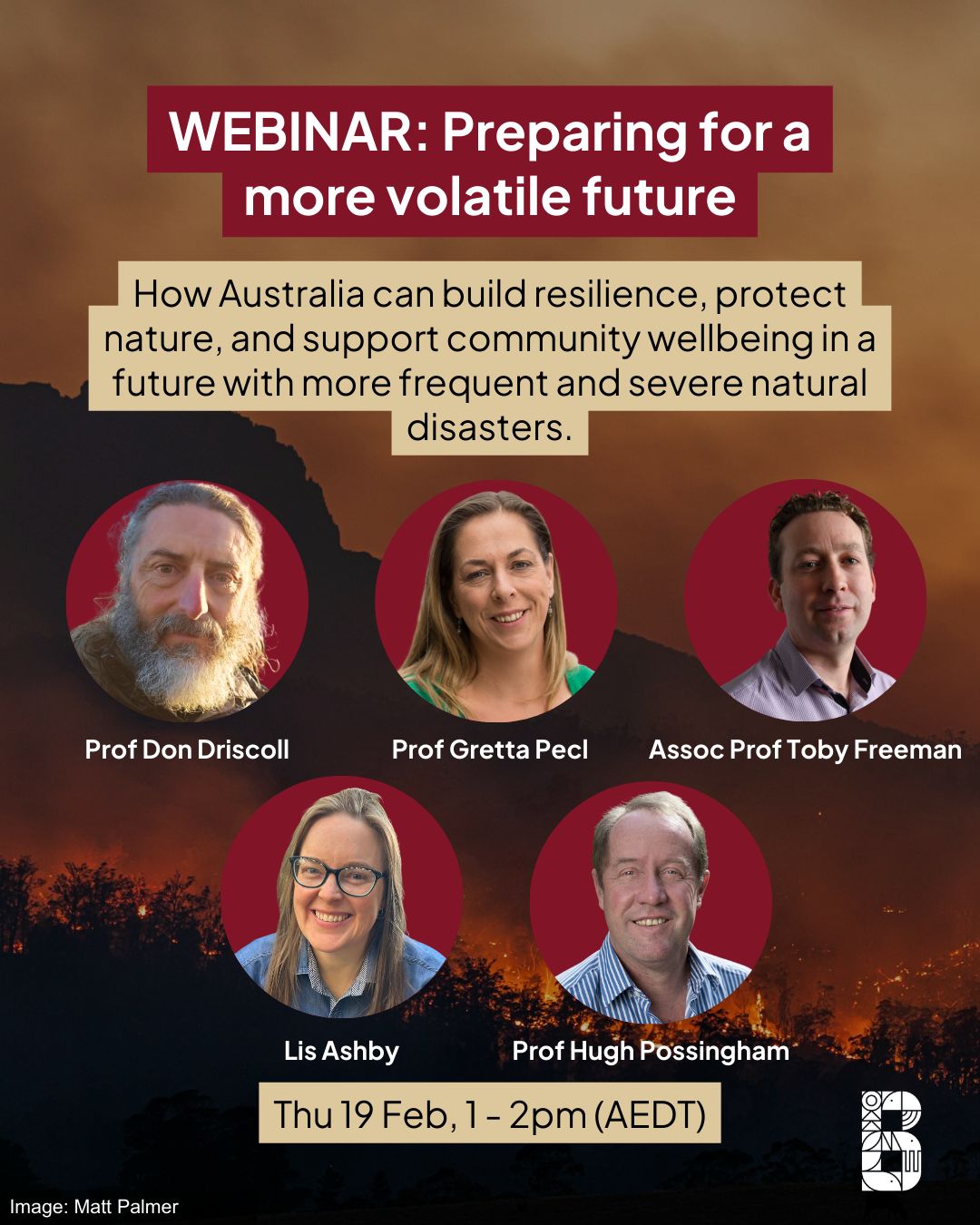
How can Australia prepare for a future shaped by more frequent bushfires, floods, marine heatwaves and ecological disruption?
In this national resilience webinar hosted by the Biodiversity Council, Sea Change Australia’s Professor Gretta Pecl brought a powerful marine perspective to the conversation — highlighting how climate change is transforming our oceans, coastlines and fisheries in real time.
Drawing on decades of research, Gretta explained how the strengthening East Australian Current is pushing warm, nutrient-poor water further south, contributing to the dramatic loss of Tasmania’s kelp forests and reshaping entire marine ecosystems. These changes aren’t just ecological — they affect coastal communities, food security, industries and cultural connections to sea Country.
Through initiatives like Redmap Australia, Gretta and her collaborators are tracking the movement of marine species as oceans warm, equipping communities and decision-makers with the data needed to anticipate change rather than simply react to it.
The webinar also explored:
- Preparing for more intense bushfires and biodiversity loss
- Assisted migration and species recovery
- The mental health impacts of ecological disruption
- Practical policy “playbooks” for an uncertain future
At its heart, the discussion asked: how do we build resilience for both nature and people?
If you’re interested in marine climate change, disaster preparedness, community wellbeing, or the future of Australia’s biodiversity, this webinar offers clear insights, real-world examples and hopeful pathways forward.
Watch the webinar below:
Read more here: https://biodiversitycouncil.org.au/news/webinar-preparing-for-a-more-volatile-future