New paper highlights species specific vulnerability to climate change in Peru
- News item
- Publication
Climate change will affect marine species differently. Some will cope, some will shift, and some will struggle. But knowing which species fall into which category requires targeted assessment.
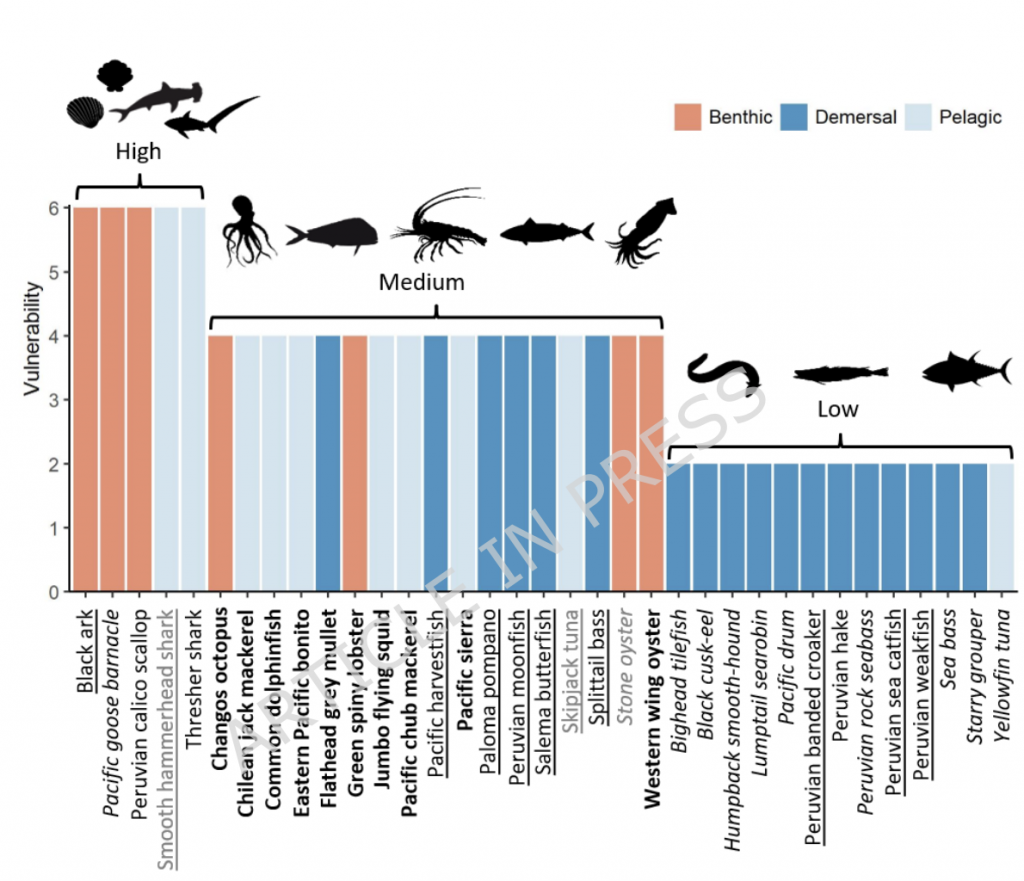
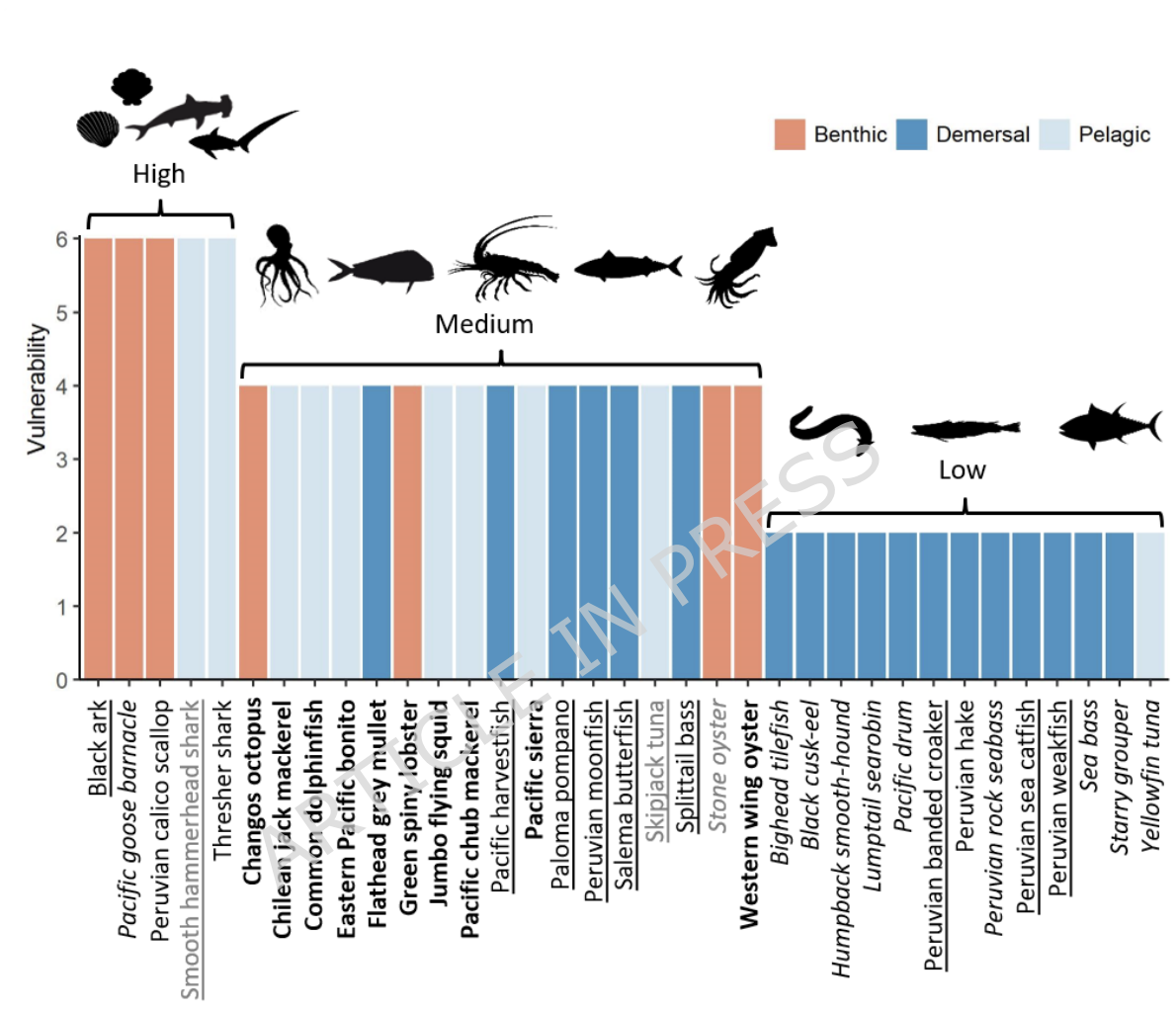
A new study, now available as pre-print in Scientific Reports, assessed the climate vulnerability of 35 commercially important fishery species off northern Peru.
The research team used a trait-based Climate Vulnerability Assessment, drawing on expert knowledge from 12 fisheries scientists, marine ecologists and oceanographers. For each species, they scored 10 climate exposure factors (including temperature, salinity, pH, chlorophyll and primary productivity) and 12 biological sensitivity traits (such as fecundity, movement capacity and habitat specialisation) to estimate relative vulnerability out to 2055.
The results showed clear differences across species groups. Benthic species, particularly bivalves like the Peruvian calico scallop and black ark, were ranked the most vulnerable. These are species with limited capacity to move as adults, meaning they must cope with changing conditions where they are. Sharks, including the smooth hammerhead and thresher shark, were also ranked with high vulnerability among the pelagic group, though the authors noted that limited data on how climate exposure factors affect sharks may have contributed to these rankings.
Temperature, primary productivity, salinity, pH and chlorophyll were identified as the main drivers of exposure across all species assessed. Demersal species were estimated to have the lowest vulnerability overall, with many ranked as low risk.
While this study focused on Peruvian waters, the approach and its findings are relevant for the Australian seafood sector. The trait-based framework used here has already been applied across the Pacific and Atlantic. Australian fisheries face many of the same pressures: warming waters, longer marine heatwaves, acidification and shifts in productivity. Understanding which species in our waters are most exposed, and which biological traits make them more or less able to respond, is essential for planning ahead.
Species-specific vulnerability assessments matter because climate change does not affect all fisheries equally. A blanket response risks directing resources and attention in the wrong places. Knowing that a sedentary bivalve faces a fundamentally different set of risks than a highly mobile tuna allows fisheries managers, researchers and industry to prioritise monitoring, target adaptation strategies and identify where the biggest knowledge gaps remain.
The full paper is available open access: Ramos J.E., Tam J., Aramayo V. et al. (2026). Vulnerability of fishery resources to climate change in the Tropical Eastern Pacific Ecosystem off Peru. Scientific Reports. https://doi.org/10.1038/s41598-026-44359-x