Species specific responses to climate change
QUESTION
Why are some shelfish species doing okay with climate change and others not? How are shellfish species impacted by climate change?
ANSWER 1
By: Dr Jess EricsonThese are great questions.
How are shellfish species impacted by climate change?
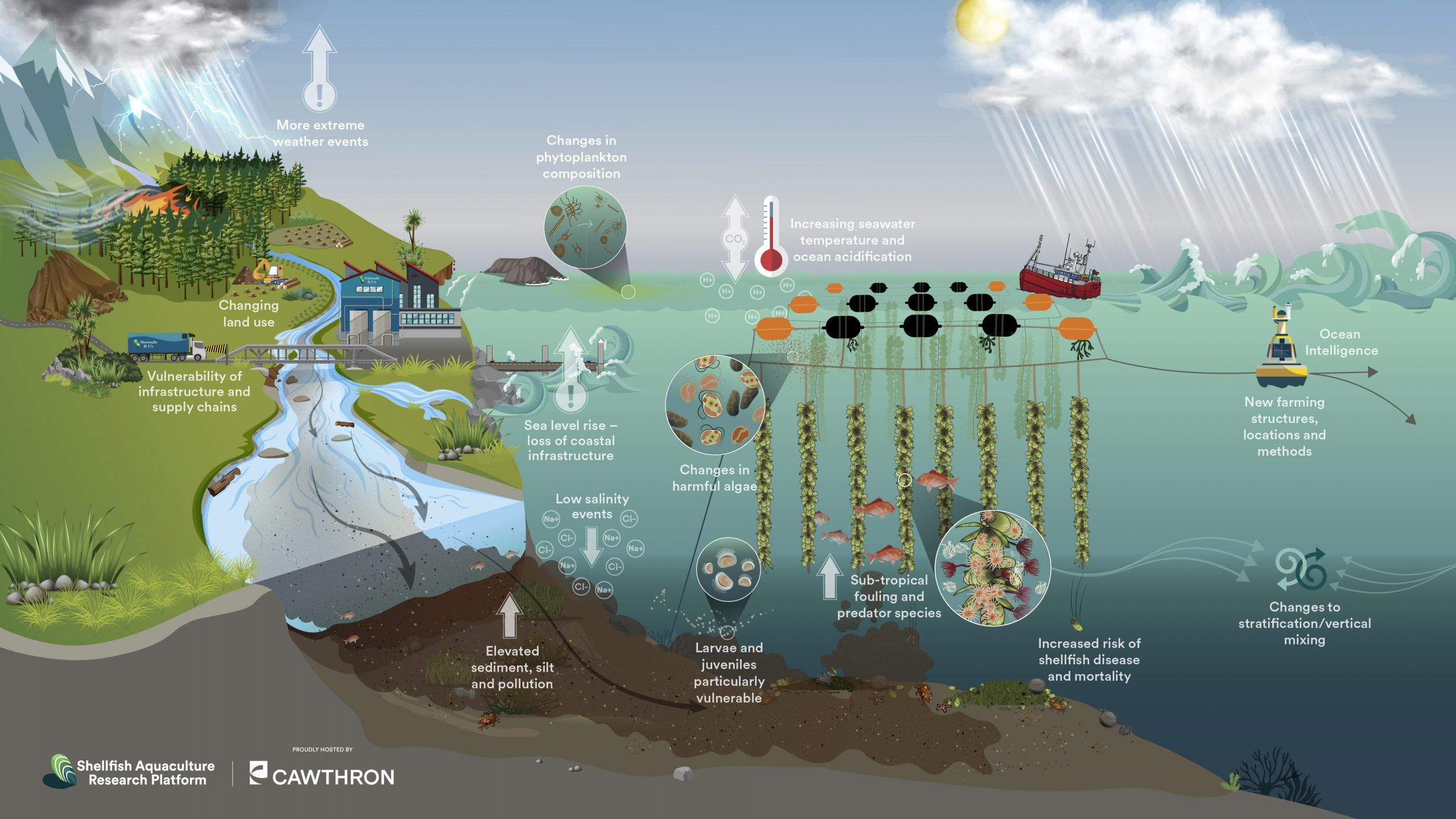
Climate change affects shellfish in many different ways, and the impacts can vary depending on the species and where they live. In coastal areas, shellfish are influenced by both land and ocean conditions, which makes their response especially complex. The attached image was created by scientists and shellfish farmers and is an example of how climate change affects mussel aquaculture.
For example, extreme weather events (such as heavy rainfall and storms) can wash sediment and freshwater into coastal waters. This can smother shellfish or force them to close their shells for long periods, reducing feeding and growth. Warmer sea temperatures, including marine heatwaves, can also stress shellfish, weaken their health, and in some cases increase mortality.
Another key issue is ocean acidification. As more carbon dioxide (CO₂) is absorbed by seawater, the chemistry of the ocean changes, making it harder for shellfish like mussels, oysters, and clams to build and maintain their shells. This can slow their growth and make them more vulnerable to damage. Climate change can also shift ecosystems in less obvious ways. For instance, warmer waters can favour fish and other predators that thrive at higher temperatures, potentially increasing predation on shellfish populations. Overall, these combined pressures of changing water chemistry, rising temperatures, extreme weather, and shifting ecosystems can significantly affect both wild shellfish and aquaculture systems.
Why are some shellfish species doing okay with climate change and others not?
The impacts of climate change on shellfish depend on both the species and the condition of individual animals. Different species have different tolerance limits. If we take ocean warming as an example, some species can cope with a wider range of seawater temperatures than others. This means climate change creates “winners and losers”: some species may even benefit from moderate warming, but only until conditions exceed their limits and cause stress.
Within a species, responses also vary depending on individual health. Healthy, well‑fed shellfish are often better able to cope with environmental stress, while those affected by poor nutrition or disease are more vulnerable. Because shellfish often face multiple stresses at once, these effects can add up, making their overall response highly variable.
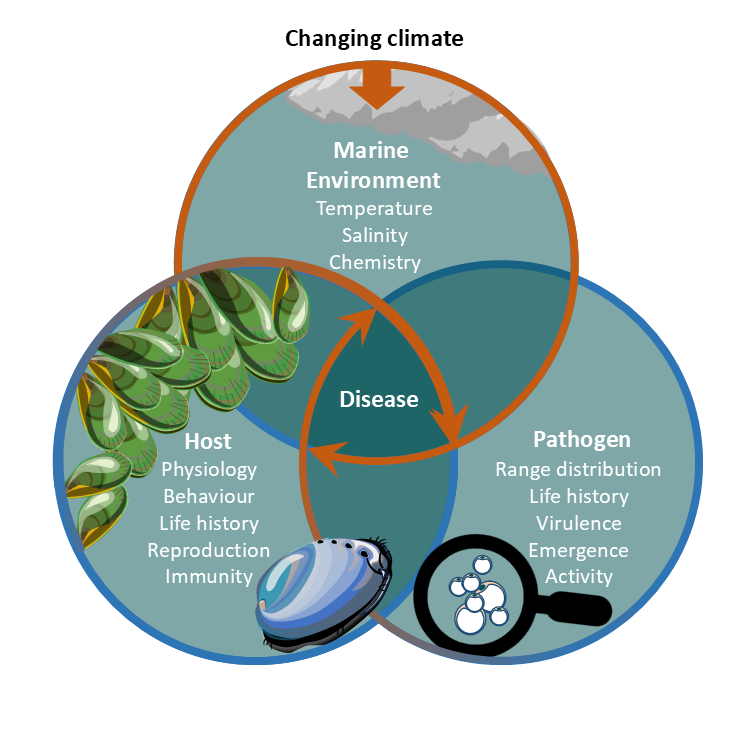
The attached diagram with three overlapping circles highlights this complexity. A shellfish’s response depends not only on its condition, but also on whether disease is present (and even on how that disease responds to the environment). This is something that not many people think about but bacteria, viruses, and parasites that affect shellfish are also influenced by climate change, which can further shape outcomes.
Supporting gallery:
Answered by: