Rebuilding Australia’s Oyster Reefs: Science, Stewardship, and Opportunity
- Adaptation story
- New South Wales
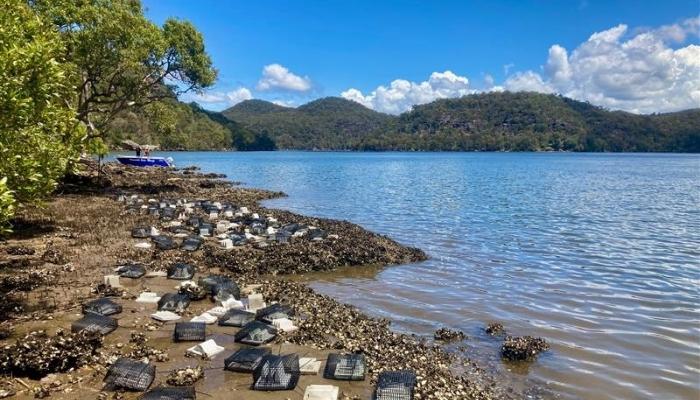
As Australia’s oceans warm and extreme weather events intensify, coastal ecosystems face unprecedented pressures. For oyster reefs, once abundant along our coasts but now reduced by 85% since European settlement, the question is urgent: how can restoration support fisheries, aquaculture, and ocean health in a changing climate?
Part of the answer lies in applying science to restore these vital habitats. Sydney rock oysters (Saccostrea glomerata) are ecosystem engineers, building reefs that provide shelter for hundreds of marine species, filter water, and protect shorelines from erosion. Yet surviving reefs are rare, and the structures that once nurtured juvenile oysters have largely vanished.
Researchers led by Dr Juan Esquivel-Muelbert at Macquarie University have decoded the “architectural rules” of natural reefs. Using high-resolution 3D mapping, they measured surviving reefs and then designed concrete habitat units replicating the small crevices and protective spaces critical for oyster survival. Deployed across three NSW estuaries, these experimental reefs revealed that juvenile oysters thrive not on the tallest or most complex structures, but where designs match nature’s blueprint, offering shelter from predators and environmental stress.
This work is not only about rebuilding oyster populations; it is about building climate resilience for Australia’s coastal waters. Healthy reefs underpin fisheries and aquaculture by sustaining oyster stocks, enhancing water quality, and supporting biodiversity. By guiding evidence-based restoration, the research transforms a legacy of loss into a pathway for sustainable growth in the blue economy.
For climate adaptation, the lesson is clear: effective restoration depends on science-led design, ecosystem safeguards, and long-term planning. By aligning restoration with ecological function, Australia can rebuild oyster reefs that strengthen coastal ecosystems, fisheries, and communities, turning past destruction into future opportunity.
Read more on the work published in Nature here
Macquarie University article available here