Science Unlocks Blueprint for Restoring Australia’s Lost Oyster Reefs
- News item
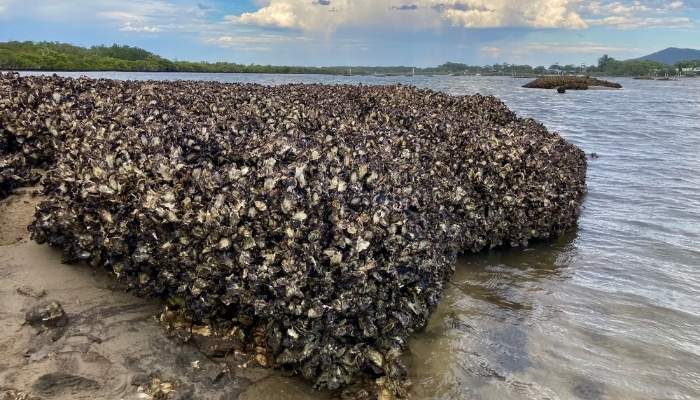
New research published in Nature has revealed how to design artificial habitats that better restore Australia’s once-abundant oyster reefs, ecosystems largely destroyed since European colonisation.
Led by Dr Juan Esquivel-Muelbert from Macquarie University, the study found that natural oyster reef structures are not random. Instead, their complex three-dimensional shapes are finely tuned to maximise juvenile oyster survival while reducing exposure to predators and environmental stress.
Researchers used high-resolution 3D mapping to analyse surviving Sydney rock oyster (Saccostrea glomerata) reefs around Sydney. They then engineered 16 different concrete habitat designs that replicated varying levels of natural reef complexity. These were deployed across three NSW estuaries and monitored for oyster recruitment, growth and survival.
The results showed that the most effective reef designs were not the tallest or most complex structures, but those that recreated specific combinations of small crevices and protective spaces found in natural reefs. These features provided shelter for young oysters during their most vulnerable life stages.
Oyster reefs are vital “ecosystem engineers”, supporting hundreds of marine species and helping protect shorelines from erosion. However, it is estimated that around 85% of Australia’s oyster reefs were lost following dredging and shell harvesting in the 19th century.
For Sea Change Australia, the findings highlight the importance of science-led, nature-based restoration. By understanding the “architectural rules” that allow reefs to persist, restoration efforts can be more effective, helping rebuild biodiversity, improve water quality and strengthen coastal resilience in a changing climate.
The research provides a practical blueprint for scaling up oyster reef restoration — in Australia and globally — at a time when restoring degraded marine ecosystems is increasingly critical.
Read the Macquarie University article here