Seaweed Solutions: Growing a climate ally from Tasmania’s reefs
- Adaptation story
- Tasmania
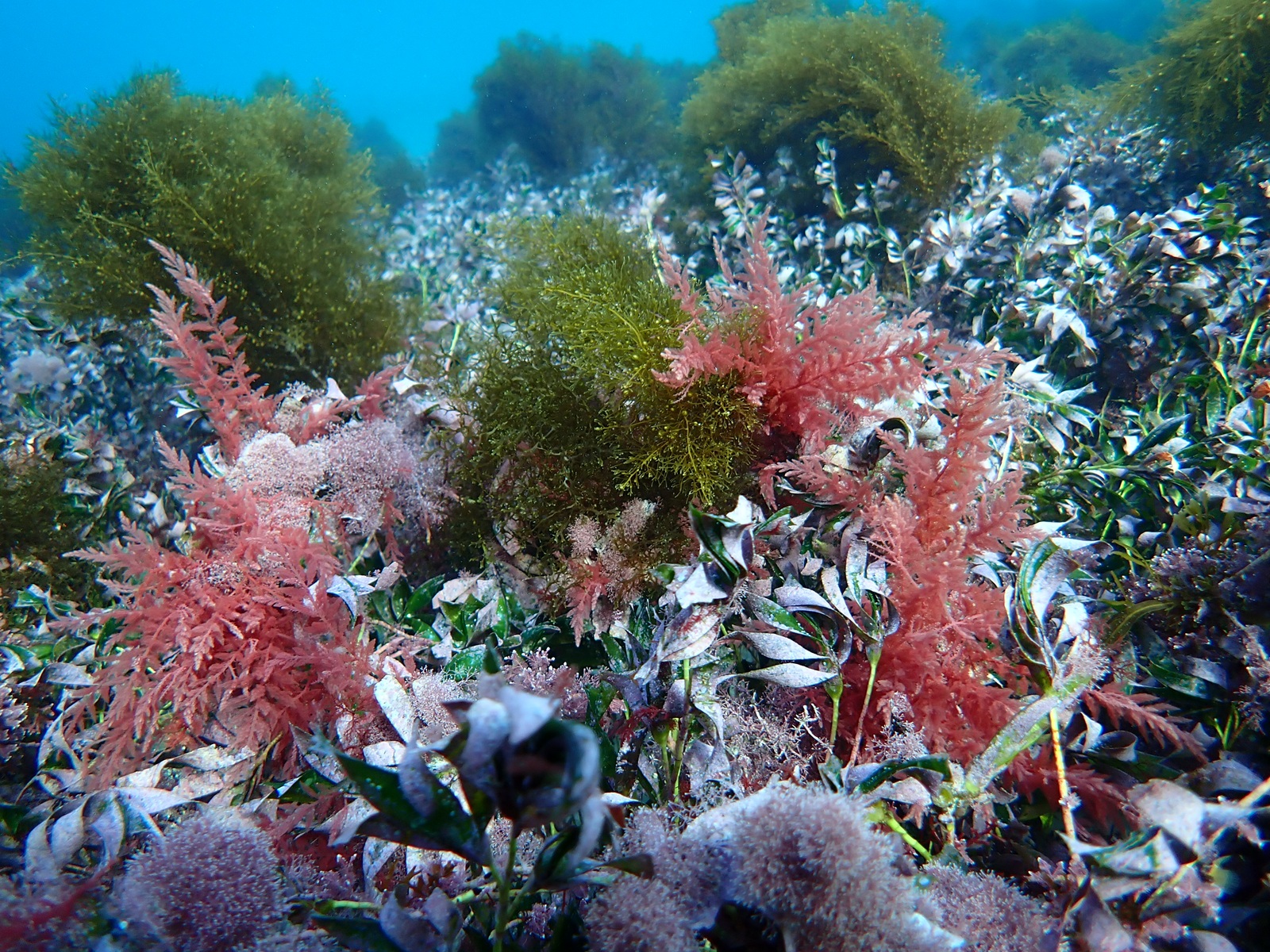

Along Tasmania’s coastline, a native red seaweed is emerging as an unlikely climate ally, with the potential to dramatically cut methane emissions from livestock. But unlocking its promise has required something deceptively simple: better data.
Institute for Marine and Antarctic Studies (IMAS) scientists have spent the past year closing a critical knowledge gap around Asparagopsis armata – a species increasingly recognised for its ability to reduce methane production when added in small amounts to cattle feed. Working alongside Tasmanian company Sea Forest, researchers surveyed 15 sites across five regions of the state to understand where the seaweed grows, when it reproduces, what it grows on, and how genetically distinct populations may need to be managed.
The findings are reshaping how Tasmania can scale this climate solution.
While Asparagopsis is considered seasonal in much of Australia, the study revealed that southeastern Tasmania supports abundant and reproductively active populations year-round. In a warming climate where reliability and scalability matter, that consistency is a game-changer. It means seed stock can potentially be sourced and cultivated throughout the year, creating a stable foundation for large-scale aquaculture.
The research also uncovered just how interconnected this opportunity is with broader marine health. Nearly 95% of Asparagopsis grows epiphytically, attaching to other seaweeds rather than directly to rock. Scientists recorded 56 different host species, underscoring the importance of maintaining healthy seaweed forests. In other words, scaling methane-reducing feed supplements depends on thriving coastal ecosystems.
Genetic analysis added another layer of insight. Two distinct lineages of Asparagopsis were identified in Tasmania, with one unique to the Furneaux Group. This suggests populations may require separate management to ensure sustainable harvesting and cultivation, an important safeguard as production expands.
For Sea Forest, Tasmania’s sole commercial producer of seaweed-based livestock feed supplements, the new baseline dataset provides the clarity needed to grow responsibly. For the livestock sector, it strengthens the pathway toward meaningful methane reduction. And for Tasmania, it represents a powerful example of cross-sector climate adaptation, linking marine science, aquaculture, and agriculture in pursuit of lower emissions.
This is adaptation in action: building the knowledge base that allows nature-based solutions to scale. By understanding where and how Asparagopsis thrives, Tasmania is positioning itself at the forefront of climate-smart aquaculture, proving that solutions to agricultural emissions can begin in the sea.
Read more here: