When the water changed
- Adaptation story
- Tasmania
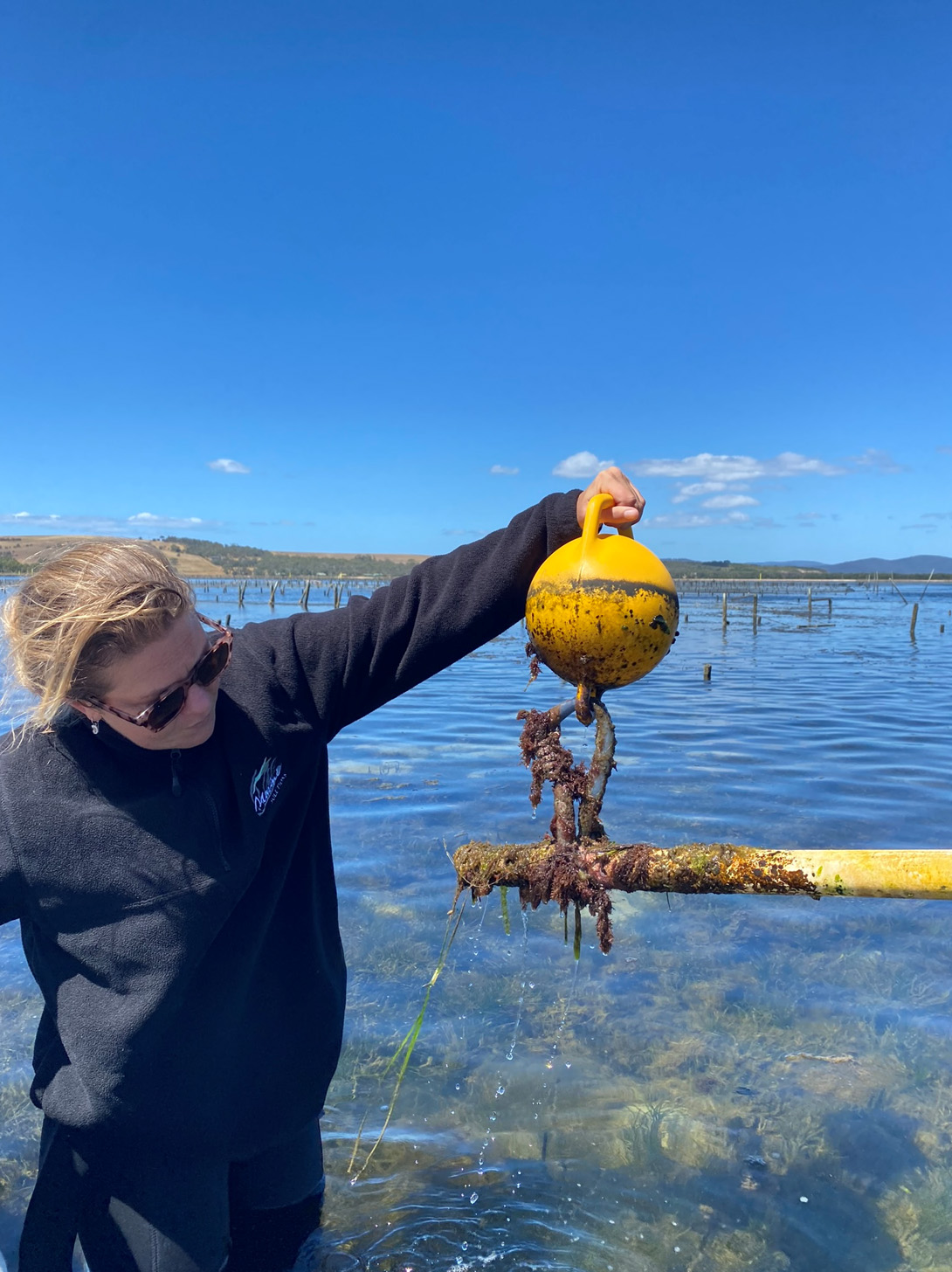
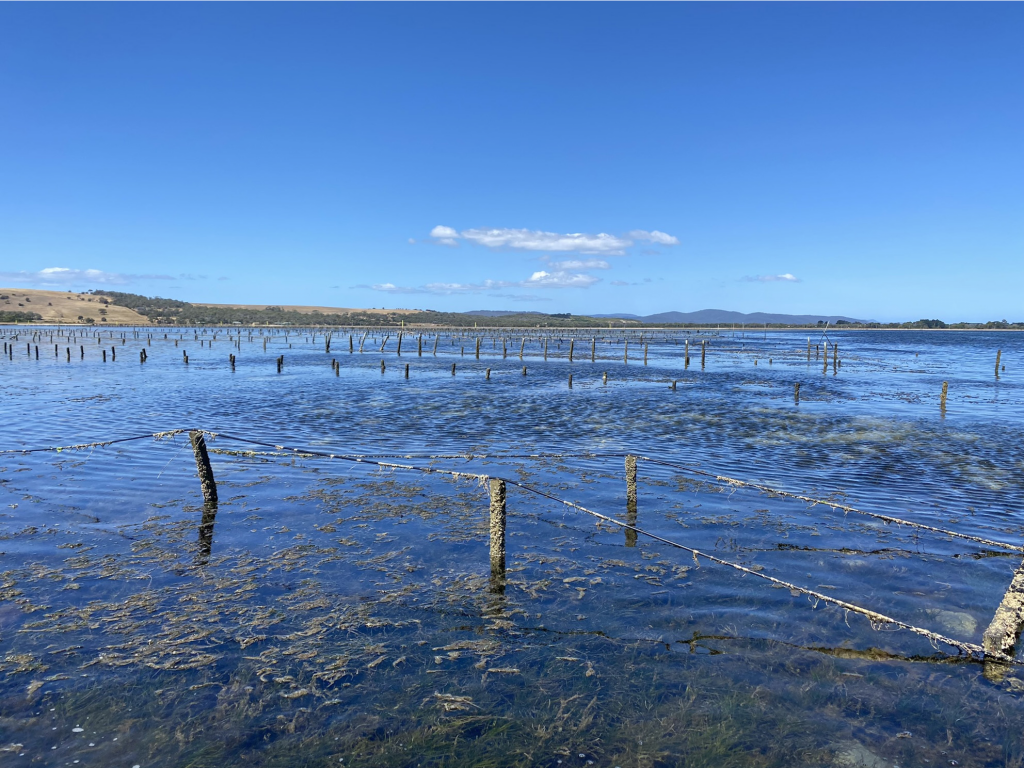
In southern Tasmania, Pipe Clay Lagoon was once one of the state’s most reliable oyster growing regions. Sheltered, well-flushed and productive, it supported thriving farms of Pacific oyster and the families behind them.
Then, gradually, the lagoon began to change.
Growers were the first to notice the signs. Oysters weren’t reaching market size. Flesh quality declined. Mortality crept upward. What had been a dependable system was becoming increasingly unpredictable.
Rather than walking away, the industry asked a different question: what’s driving this shift — and what can we learn from it?
Backed by FRDC project 2023-176, Tasmanian consultancy Marine Solutions undertook a deep dive into the lagoon’s history. Instead of launching costly new field campaigns, the team turned to something just as powerful: decades of existing data. Water quality records, satellite imagery, aerial photography and local knowledge were brought together to reconstruct how the lagoon had evolved over time.
The picture that emerged was one of gradual but compounding change.
Sedimentation had slowly reshaped the entrance, reducing flushing. Channels shifted. Extensive seagrass meadows expanded across the lagoon floor. While ecologically valuable, the dense seagrass altered daily oxygen and pH cycles. Layered on top of tidal swings, warming temperatures and catchment runoff, the result was a system placing chronic stress on oysters.
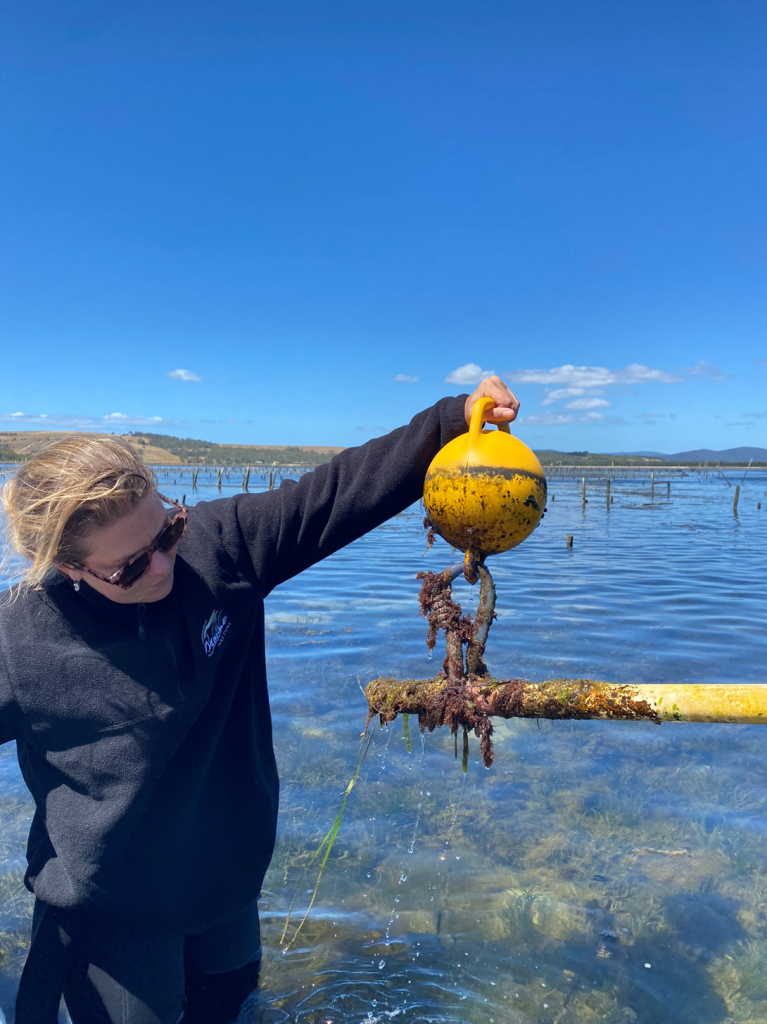
There was no single culprit — and no silver bullet.
But that insight is precisely where adaptation begins.
By understanding the cumulative drivers of change, some growers are now exploring practical adjustments to farming methods, including altering growing heights and refining site selection. Just as importantly, the findings are acting as an early warning for other Tasmanian embayments with similar characteristics.
The project has reinforced a powerful lesson: long-term, consistent monitoring is not just record-keeping — it is an adaptive tool. Without comparable datasets over time, slow environmental shifts can go unnoticed until impacts become irreversible.
This story isn’t about reversing seagrass expansion or engineering a lagoon back to its former state. It’s about recognising change early, using evidence to inform decisions, and adjusting practices to remain viable in a shifting climate.
What’s happening in Pipe Clay Lagoon could happen elsewhere. But by investing in monitoring, interrogating existing data, and sharing lessons across the sector, Tasmania’s oyster industry is strengthening its capacity to respond before crisis hits.
Adaptation doesn’t always look dramatic. Sometimes it looks like careful analysis, honest conversations, and incremental shifts in practice.
In Pipe Clay Lagoon, knowledge itself has become the foundation for resilience — helping ensure that the next chapter of Tasmanian aquaculture is informed, adaptive and prepared for whatever comes next.
Read more from FRDC here and the final report is available here.